- Company
- About Us
- Brand Story
- Our Team
- Testimonials
- Ethical Code
- Sustainable Tourism
- Sustainable Tourism Mission Statement
- Corporate Sustainability Policy
- The carbon footprint of tourism
- Sustainability Feedback
- Dos & Don’ts
- Related Links to Sustainable Tourism
- Safe Travels Protocols
- Sustainability Guidelines for Activities
- Fair Trade Division
- Case Study : Keralavoyages
- Sustainability Progress Report
- Awards & Acknowledgements
- Sustainable Policies
- Privacy Policy
- Contact
- Services
- TRAVELERS PICK
- Sustainable Itineraries
- Tours in India
- Day Programs
- Special interest tours in India
- Luxury Tours in India
- Beach Holidays
- Culture, Tradition and Lifestyle
- Nature Trails
- Women Tours
- Family Holidays
- Nature Walks and Wildlife Safaris in India
- Backwater Tours in Kerala
- Ayurveda Holidays in Kerala
- Trekking & Camping
- Temple Tours in India
- Birding Tours in the Western Ghats
- Art Forms & Festival tours
- Tribal Village Tours in India
- Heritage Tours in India
- History & Archeology Tours in India
- Special accommodations in South India
- Active Holidays
- 12 Days Kerala, Karnataka and Goa
- 7N Multiple Days Trekking and Camping in Munnar
- Nature Walks & Wildlife – Western Ghats Birding & Safaris
- Nature Treks & Wildlife Safaris – Western Ghats Birding & Safaris Shorter Version
- Cycling & Trekking in Kerala – 15 days activity tour in Kerala
- 5 days trekking and staying at Jungle Lodges in Chinnar Wildlife Sanctuary, Munnar
- 14 Days Western Ghats – Nature Walks, cycling & Wildlife Safaris
- MICE
- Destination Wedding
- Destinations
- Exclusive
- Contact



Culture & Nature trail tour on Karnataka & Kerala
20 Days 19 Nights History & Archeology Tour Karnataka and Kerala

Day 01 – Arrival Cochin
On arrival in Cochin,you will be transferred to your hotel.Rest of the day for taking rest.Evening watch a classical art performance at Greenix Theatre which is a kaleidoscope of Kerala classical arts like Kathakali, Kalaripayattu (Martial Arts),Bharatanatyam etc. Overnight at Hotel.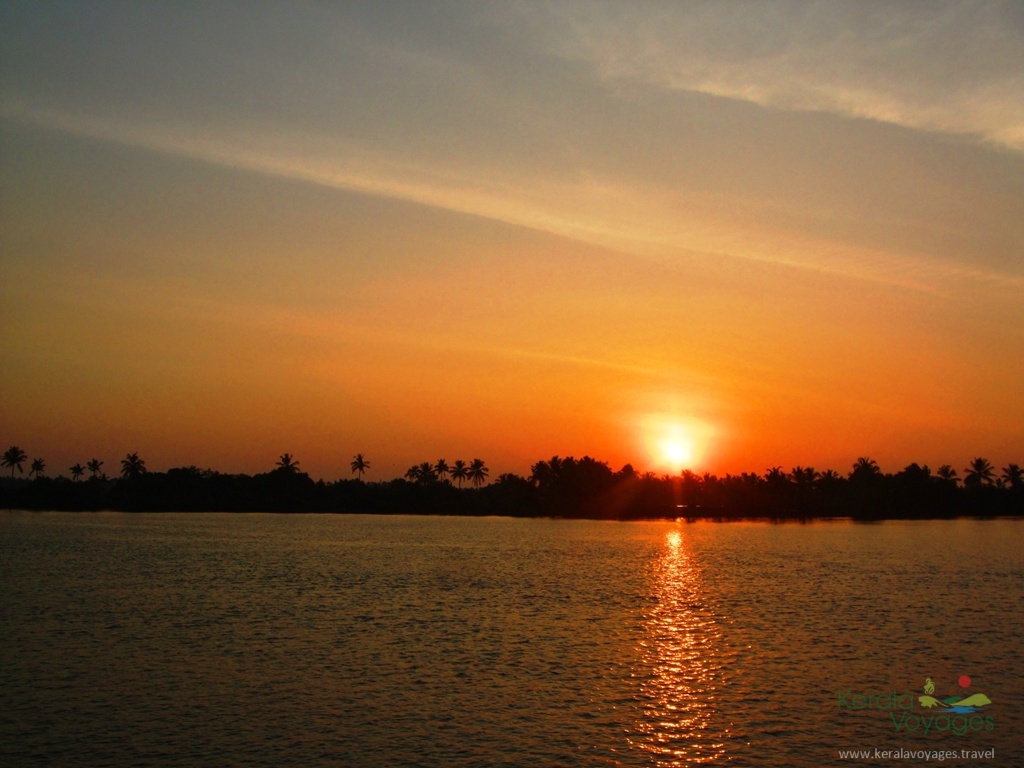
From time immemorial, the Arabs, British, Chinese, Dutch, and Portuguese have left indelible marks on the history and development of Cochin. Over the years, Cochin has emerged as the commercial and industrial capital of Kerala and is perhaps the second most important city on the west coast of India. Cochin has Asia’s best preserve Synagogue, the Dutch Palace and the oldest European Church in India – the St. Francis Church.
Day 02 – Cochin
Morning, after breakfast, proceed for a village backwater Cruise with lunch. Afternoon back to Cochin for a short city tour of Cochin.Evening visit Pepper Trails Kitchen to witness a cookery demo followed by Dinner. Overnight at the Hotel.
Village backwater Cruise – A journey in a country boat into the pristine purity of a typical village backwater of Kerala… goes through the zigzagging narrow canals and paddy fields fringed with coconut palms…..watch rare birds… country boat making… a natural fish farm where you can go fishing… You will witness coir making, toddy tapping before you end up your exclusive experience in our Farm House for lunch -a delicious traditional Kerala dish under a tree… While scrolling through this amazing village,you will watch the common life of the villagers for their livelihood. You will see them fishing in the river, the women do the coir making,a toddy tapper who does his job as a routine, men climbing the coconut trees to pluck the coconuts, later peeling the same to prepare to dry and make oil extraction possible. Its all about a life experience which you will cherish throughout your life.
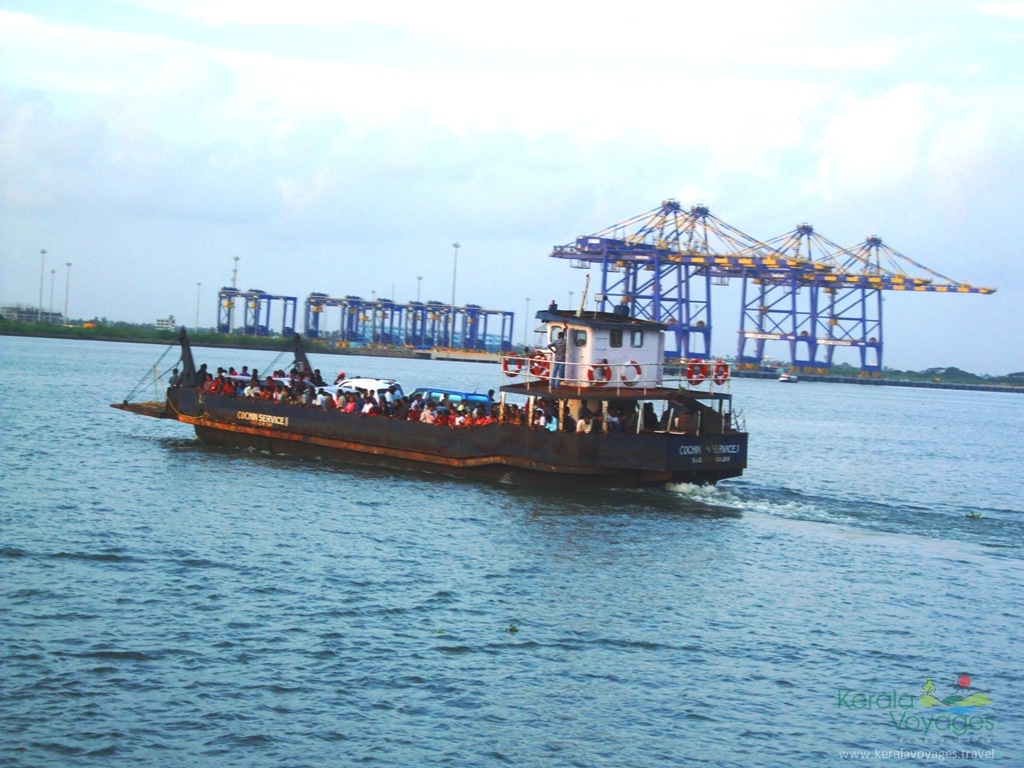 Cochin Sightseeing – St Francis Church, built in 1510 by friars brought to India by Vasco da Gama, is the first European church built in India and is the site where Vasco da Gama was buried. The JewishSynagogue was built in 1568, Chinese hand-painted tiles are one of the attraction. This, the only Synagogue in India has a nostalgic past of a Jewish Diaspora. The “Dutch Palace” was built in the 1550s; the palace contains excellent mythological murals and a rare example of traditional Keralite flooring – a subtle mix of burnt coconut shells, lime, plant juices and egg whites – which gives the effect of polished marble.
Kerala has a distinctive cuisine, very unusual and different from the rest of India. Cooking in Kerala is all about discoveries, aromas and colours. Kerala cuisine is very hot and spicy and offers several gastronomic opportunities to those willing to experiment with the local cuisine. Traditionally, in Kerala food is served on a banana leaf. One has to take food with right hand. Tender coconut water is a refreshing nutritious thirst quencher..Seafood’s are main diet of Coastal Kerala. Here at Pepper Trails, we are trying to pass on a tradition of our kitchen to the World.
The cookery demo will be conducted at short distance away from Kochi, in the beautiful ambiance of a Kerala’s modern architectural bungalow, nestled on the top of a valley in its natural setting with a peaceful ambience combined with refreshing environment, promising to make your another day in Kerala a wonderful experience. Enjoy a warm welcome by the breath taking lush green landscape complimented by a welcome drink and… now you are a part of our home… This cookery demo is not just being in the kitchen, will give you hands on experience, you’ll learn to prepare 3-4 variety of Kerala’s delicacies in a friendly, relaxed, informal environment. Each dish will be demonstrated, prepared and cooked. You will then be able to enjoy tasting each dish and take home the recipes as a memento of your delicious day .
Day 03 – Cochin – Nilambur (200 kms-5 Hours)
After breakfast, drive to Nilambur to check into a 220 year old Palace converted Homestay which belongs to the Nilambur Royal Family. Experience the royal hospitality.Rest of the day free for walking around the villge. Overnight at Nilambur PuthiyaKovilakom.
Nilambur Kovilakams or palaces situated at the foot of the Western Ghats along the banks of the river Chaliyar, are architectural marvels known for their beautiful frescoes and wood work. These residences of the local rajas were built according to traditional Kerala architecture and boasts of excellent skill and craftsmanship.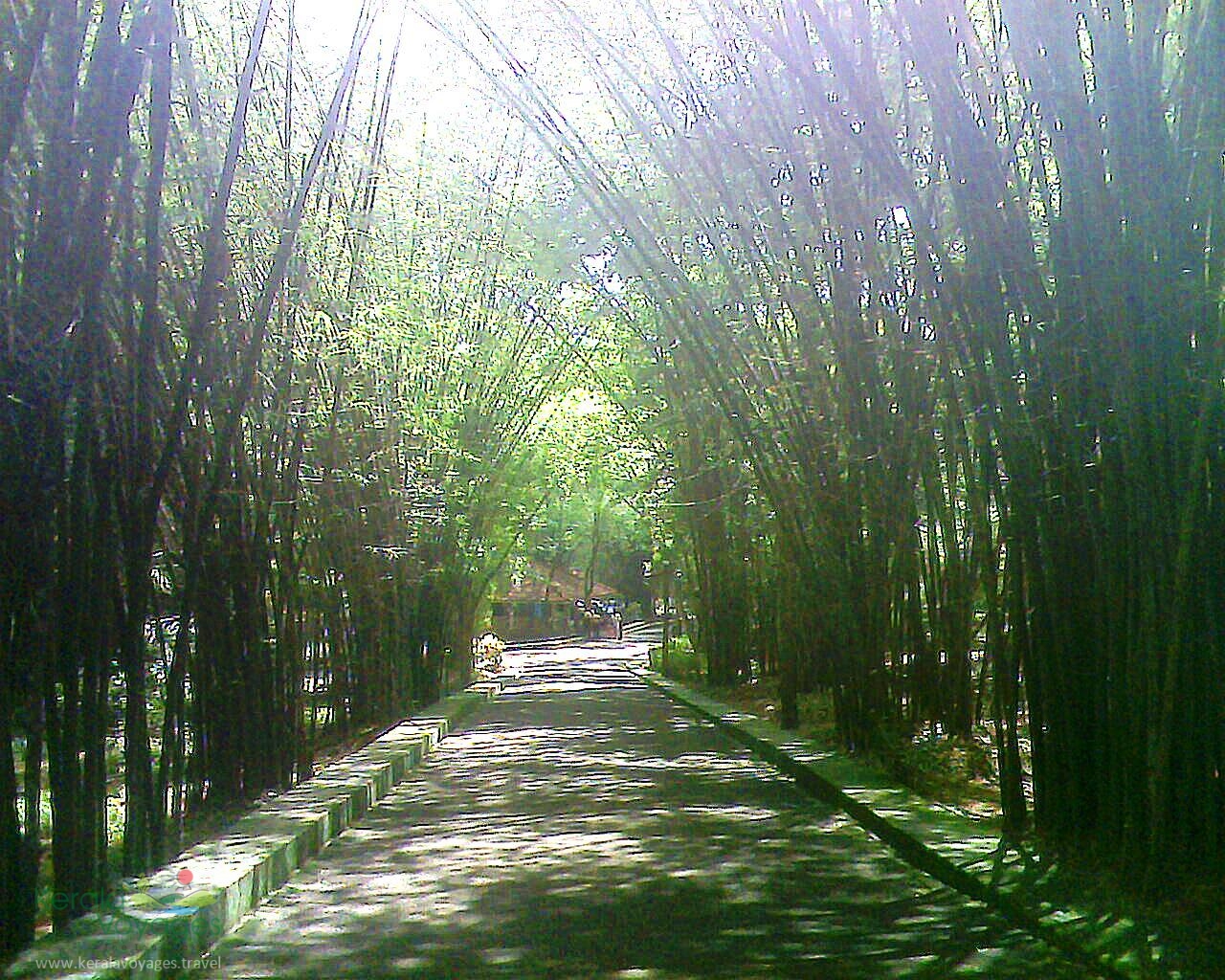
The generous rulers of Nilambur who eventually emerged as one of the richest and most prosperous royal families of Kerala always gave impetus to the welfare of the society and played a significant role in shaping and evolving the Ernad Taluk into a modern township. Nilambur Kovilakam was one of the richest families in Kerala with over 125000 acres land as asset. But unlike many other royal families Nilamburkovilakam gave away a major chunk of its assets for the well being of the society without taking anything in return. More than 48 thousand acres of land was given to Muthumala wildlife sanctuary on lease which later came under the Government.
Day 04 – Nilambur
After breakfast visit the first Teak Museum in the World and the only one in India depicting the features of Nilambur Teak in comparison with other available varieties. Return home for lunch.Afternoon visit Conolly’s Plot,the first Teak Plantation in the world.You may also visit the local market for shopping local handloom etc. The Nilambur Kovilakom is situated in a vast area and the Palace houses are now owned and inhabited by the present generation of the Royal family. The Palace temple also worth visiting though they don’t allow to enter inside. Overnight at Puthiya Kovilakam.
 The well-known Teak Museum is regarded as the first of its kind in the world and the only one in India; it is a house to the treasures of historical, aesthetic and scientific aspects of Teak. The museum was established on the campus of the sub-centre of Kerala Forest Research Institute (KFRI) in 1995. The museum was established here owing to the historical significance of the region. The world’s first Teak (Tectonagrandis) plantation was raised in Nilambur way back in the 1840s in order to ensure a steady supply of Teak timber to the British.
The ground floor of the double-storied museum exhibits a translite of Kannimara Teak, the oldest naturally growing teak tree located at the Parambikulam wild-life sanctuary and the life-size replica of the trunk of the largest known teak tree growing in the Malayattoor forest division. Another translite of a giant tree present in the oldest teak plantation in the Conolly’s Plot at Nilambur offers the visitors a glimpse into the teak plantation activities undertaken 160 years ago. The 142 mtr long hanging bridge across Chaliyar River to Conolly’s plot is also an interesting part of the visit. The largest Teak in this plantation has 4.9 Mtrswidth. Some of the other attractions here are the traditional granary and a miniature model of sailing vessel called Uru made of teak wood.
Detailed description on the flower, fruit and natural regeneration of teak as well as the prominent characteristics of these species of trees are exhibited in the first floor of the museum. In addition to this, the various methods of seed-grading, presowing treatment, preparation of teak stumps, vegetative propagation of teak and the different stages in the complete rotation cycle of teak from seed to mature tree are also on display.
Apart from teak, the mueusm also has a collection of over 300 butterflies, moths and insects found in teak plantations. Another exclusive section in the museum deals with the various physical disorders of teak, disease-causing insects and pests, plantation and other nursery diseases.Some of the special attractions of the Teak Museum at Nilambur are a series of interesting paintings portraying tree felling operations, a collection of 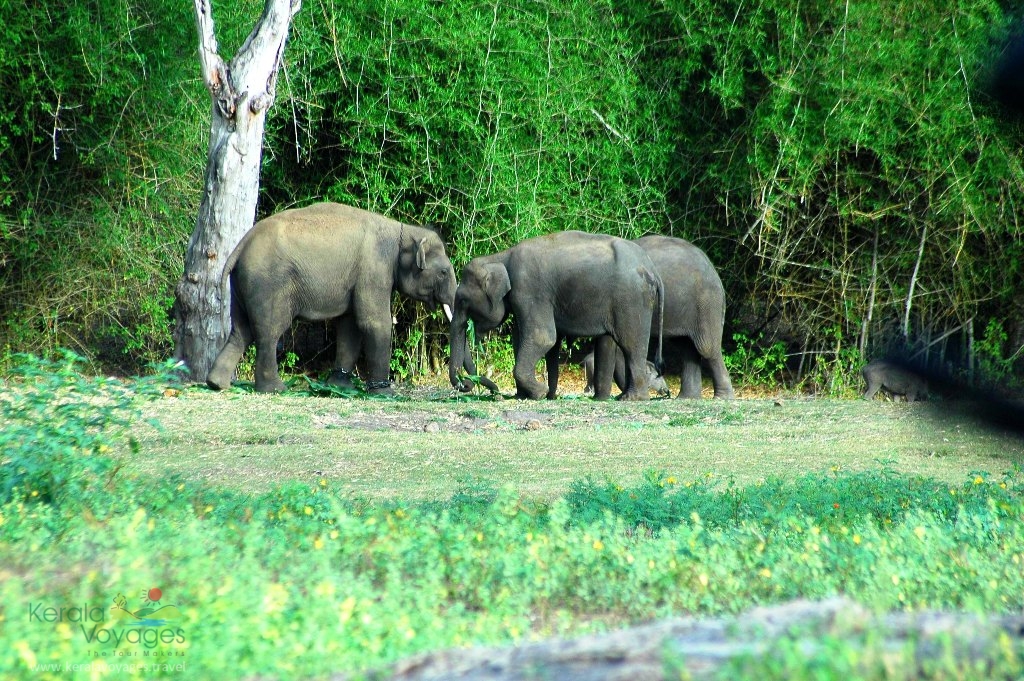 photographs on the phonological events of teak at different seasons, exhibits on traditional harvesting tools and wood samples of different ages from various parts of the world.
The 800-metre long bio-resources nature trail on the museum campus is indeed, an interesting one. This nature trail passes through a heavy growth of shrubs, trees and bamboos. One can also find the different species of birds and reptiles here. There are 50 naturally grown tree species and 136 endangered and near-extinct tree species of the Western Ghats planted in this nature trail. About 58 species of birds, both resident and migratory, has been recorded in this area. A medicinal plant garden consisting of 150 species is also another attraction worth seeing
Day 05 – Nilambur – Mysore(175 Kms-5 Hours)
After breakfast, proceed to Mysore.You are driving through spectacular Tea Plantations at Gudalloor.The main attraction of this drive is that you will drive through the two of the major Wildlife Sanctuaries in the Western Ghats ,Bandipur&Mudumalai.You will sight many wildlife on the way.If you are interested to join a Wildlife safari,you may do it at either Bandipur or Mudumalai.There are regular safaris during mornings and evenings.On arrival at Mysore,check into your hotel.Evening you may opt to go for a shopping. Mysore Silk is very popular and worth to have a look. Overnight at the Hotel in Mysore.
The Bandipur National Park is one of the most fascinating wildlife centers, nestled in the foothills of the Nilgiri. As you penetrate deep into the forests, you can almost hear the mute conversations between the animals and the trees. There’s a lot, lot more to discover. Peafowl, patridges, quail, hornbill, giant squirrel, dhole (wild dog) elephants, sambhar, barking deer, etc. An endless variety of wildlife flourishes here and the trees sheltering them are even or beautiful. The green fauna and flora of these rain forests are unimaginable with a thick population of wild animals.If you opt for a safari,you will be taken deep into the forest in safari jeeps/vans escorted by the wildlife wardens.
Day 06 – Mysore
Day to explore the royal Palace of Mysore and the rich heritage.Mysore is known as the city of Palaces and the entire architecture and decorum of the place is in harmony with the Royal style for which Mysore is known. Today 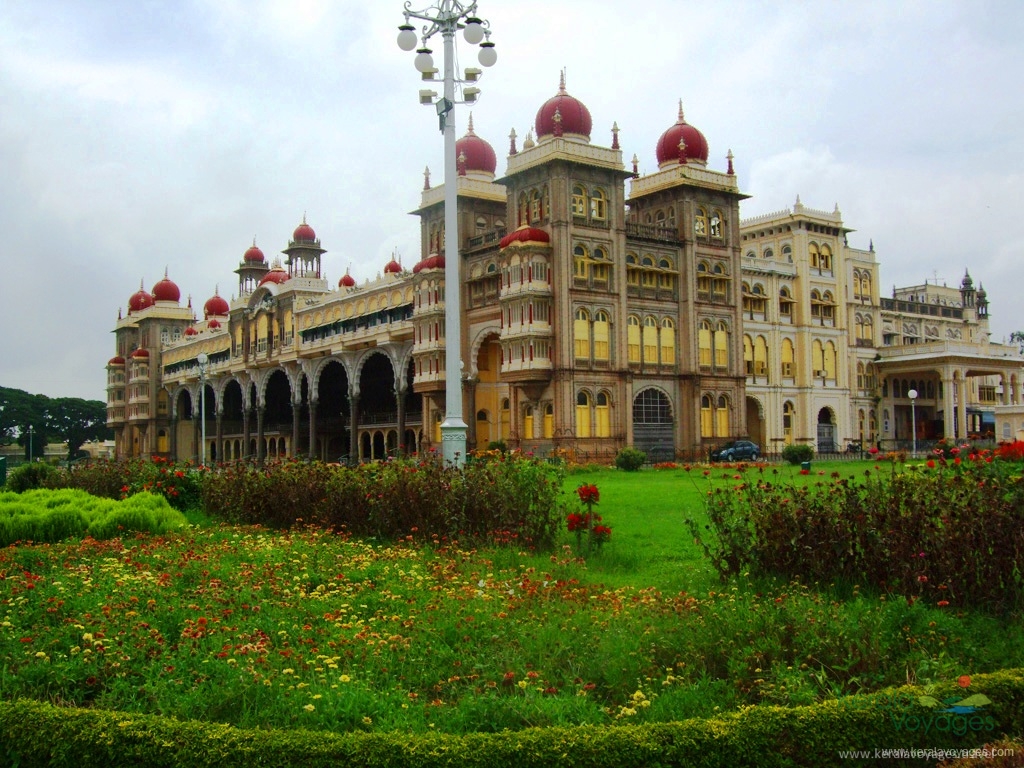 you will visit, Maharaja’s Palace, ChamundiHills, Nandi Bull etc. You may also visit Somnathpur. Overnight at the Hotel.
Mysore, the capital city of the Wodeyars has always enchanted its admirers with its quaint charm, rich heritage, magnificent palaces, beautifully laid-out gardens, imposing buildings, broad shady avenues and sacred temples. There’s an old world charm about the city that reaches out and leaves no one untouched.Visit the palace of the Maharaja built in 1911-12. The palace is of harmonious syntheses of the Hindu and Saracenic styles of architecture with archways, domes, turrets, colonnades and sculptures which are magnificent. Visit the Art Gallery; drive up to Chamundi hill to see Chamundeshwari Temple & a panoramic view of Mysore. On the way back, see the Nandi Bull. Mysore is known the world over for its exotic sandalwood and rich silks.Mysore, an undulating tableland, covered in parts by granite outcrops and fringed by verdant forests, offering several attractions ranging from the royal splendor of Mysore City and its fabulous Dasara Festival to exquisite temples, pilgrimage centres and scenic spots.
Maharaja’s Palace is a synonym for Mysore in the Tourist Map.Its built in Indo-Saracenic style with domes,turrets,arches and colonnades. The Palace is a treasure house of exquisite carvings and works of art from all over the world. The walled Palace complex houses the Residential Museum,temples and shrines including ShwethaVarahaswamyTemple. The jewel studded golden throne,the pride of the Wodeyars and the symbol of their sovereignity, displayed here during Dussehra festival in October.The Palace will be lit with One Hundred Thousand electric bulbs on Sundays and Public Holidays.
Somnathpur, a tiny village on the banks of the Kaveri, 140 kms, south-west of Bangalore. This place boasts of one of the last and the grandest of Hoysalamonuments – the Kesava Temple. The riches and splendour of the Hoysala court were already evident in their grandtemples at Belur and Dvarasamudra (present day, Halebid).The temple, however, was built by this celebrated army commander, Somnath. Some year ago he had founded a village on the left bank of the Kaveri River, which he named Somnathpur, after himself. All the facts are duly mentioned on the slab in old Kannada script and appear as though to have happened yesterday!Somnathpur is more representative of the age, since it did not suffer destruction as much as Belur and Halebid did and hence offers a more unbroken view of period’s architecture. Often it is referred to as the poor cousin of Belurand Halebid.Its unique design and perfect symmetry are ignored amidst the farms and agricultural lands of surrounding villages.
Day 07 – Mysore-Hassan (125 Kms-3 Hours)
After breakfast drive to Hassan .Enroute visiting Srirangapatnam. On arrival, check in at the Hotel.Evening you may opt to go for a village visit by bicycle. Overnight at the Hotel.
Srirangapatna is city of historic, religious, and cultural hub situated in Mandya district of Karnataka, just about 13kms from Mysore. Here you will come across the entire town as an island enclosed by River Kaveri. This history-rich town was the capital of the Warrior-Kings Hyder Ali and his son Tipu Sultan – The Tiger of Mysore.
Fort : It is from here that Tippu charged at the British soldiers with his legendry sword. An obelisk in the Fort marks the place where he fell – betrayed by his own men. Within the Fort is a Mosque and the Sri Ranganathaswamy Temple.
Daria DaulatBagh : Built in 1784, this Summer Palace was one of Tipu’sfavourite retreats. It stands on a raised platform at a height of 1.5 metres. The Bagh is situated on the banks of Cauvery river has treasured the paintings, engraving, arms that depict the Valant victories and Struggles of Tipu Sultan. The structure made of teak, this Indo-Saracenic structure has ornate and beautiful frescoes. The corridors showcase murals which describe Tipu’s ordeals in the battlefield against the British.
Museum showcases painting with Tipu wearing a turban, a striped shirt, a necklace and a belt adornedwith precious stones with a sword attached. In 1792, G F Cherry painted the portrait. One more portrait was made by JonyZoffany in 1780. There are pencil sketches of the Tipus sons, minister of the Nizam, his son, Krishna Raja Wodeyar III his maternal uncle, Nandi Raja all drawn by Thomas Hickey, an English artist between 1799 and 1801. The museum boast ofcollection of coins of various denominations of those times and medals made of bronze, silver and copper issued by the English to commemorate their victory over Tipu.
Masjid-E-Ala or JamiaMasjid :The mosque situated near the Bangalore Gate of the fort buit by Tippu Sultan It is said that he performed the first imamath himself. standing on a high basement with an open court in the open court in the front and a covered verandah with a spacious prayer hall with the “Mihrab” on the west. There is an inscription mentioning the ninety-nine names of Allah and another records the date of its construction by Tippu in 1787 A.D.There are 2 minarets that are double storied and octagonal in shape with pigeonholes surmounted by domes that adds to the grandeur of the entire structure. There are 200 steps leading to the top of the minarets from where one can get a picturesque view of the Masjid.
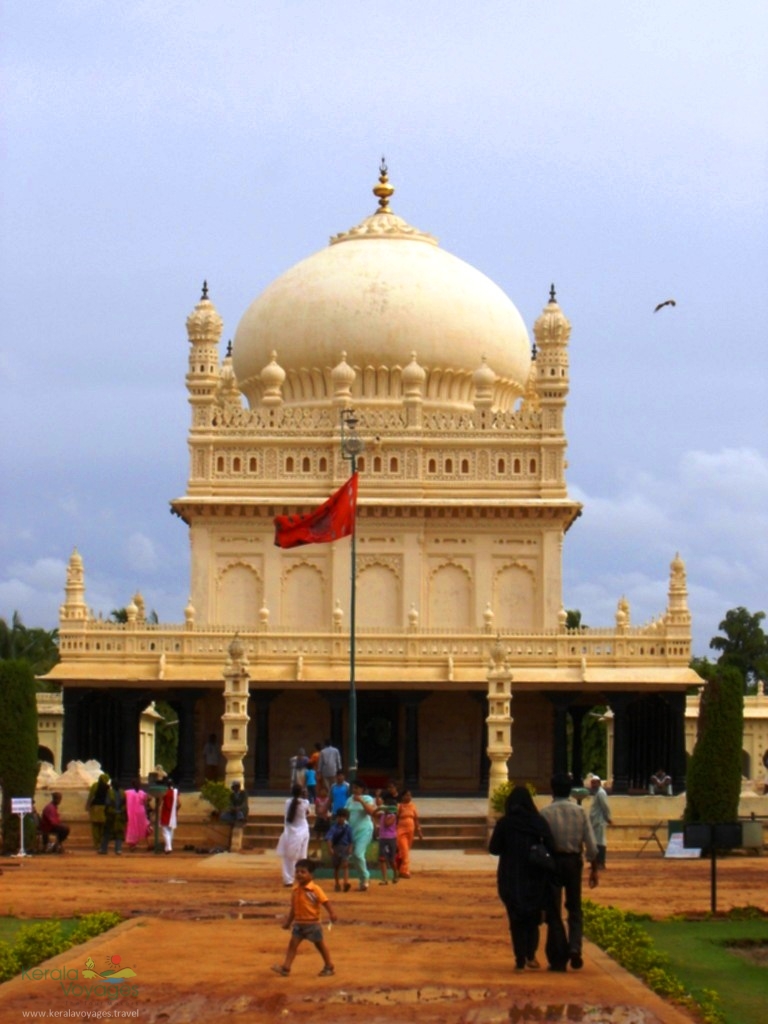 Gumbaz : Mausoleum of Tippu Sultan, and his father Hyder Ali and mother FathimaBegam. This was built by Tippu Sultan between 1782-84, the Gumbaz, an imposing structure in the midst of the Lalbagh garden, stands on a high and wide platform with an open verandah of polished pillars all round.The importance of Gumbaz lies in its well-shaped large dome, ivory inlaid doors, carved stone windows of fine workmanship and inscriptions. Tipu’s favourite Tiger stripes cover the walls.Inside are the tombs of Haidar in the center, his wife and his son Tippu on either side. In the verandah and on the platform are the other tombs of Haidar’s family members.
Colonel Bailey’s Dungeon : Named after Colonel Bailey who died here in 1780 A.D., this dungeon was used to imprison Captain Baird, Colonel Brithwite, Captain Rulay, Frazer, Samson and Lindsay by Tipu Sultan. The dungeon measures 30.5 metres width 12.2 metres height and is built of brick and mortar.Prisoners were chained to stone slabs fixed on its walls. During the seige of Srirangapatnam, one of the cannons rolled back, pierced the ceiling and fell into the dungeon. One can see them still lying there .
Day 08–Belur & Halebid
Day to visit Belur&Halebid temples famous for its Hoysala Architecture using the soft stone with amazing hand craft.You may opt to have an Ayurvedic Massage. Overnight at the Hotel.
The temples at Belur and Halebid, which remained incomplete despite 80 years of labor, are offerings of the finest workmanship in stone to the gods. The elaborate sculptured decoration on the temple, according to some critics, is even better than the Friezes at Konark in Orissa and Khajuraho in Madhya Pradesh. The Temple at Halebid is still used for worship today.  Belur was the capital of the Hoysalas during the 11th and 12th centuries, before the capital was moved to Halebid. The thing not to be missed here is the impressive Chennakeshava Temple, which has some of the most intricate and beautiful carvings in India. Beside this temple, there are two other temples to see, the Viranarayana Temple and the Chenniga Raya TempleTheChannakeshava temple at Belur, which was (the earlier Capital of Hoysala Kingdom) built by the emperor Vishnuvardhana, during 1117 AD to commemorate his conversion from Jainism to Vaishnavism, has attracted connoisseurs of art the World over, through its intricate sculpting wonders.
The 42 bracket sculptures that decorate the outside walls of Chennakeshava, under the eaves, are fine examples of Hoysala art. Hoysaleshvara is a 12th century Hoysala temple in Halebid, the old Hoysala capital. The temple is laid out on a double plan, almost as if two temples were joined side to side. Both shrines open to the east, and rest on the usual Hoysala star-shaped bases.There are no gopurams or towers.Sequences from Ramayana, Mahabharatha&Bhagavatha are depicted on the outer walls of these temples. The efficiency and experience of the sculpture, who had carved these stories in stone is bewitching. Outside there is a Nandi (Bull) the mount of Lord Shiva bullock where the palace stood, connected to the temple by a passage. The walls of the temples are covered with variety of gods and goddesses, animals, birds and dancing girls. There is a museum on the lawn with 12-13th century sculpture and the gold coins in use at the time.TheKedreshwara temple where the sculptor’s virtuosity seems to have surpassed even the goldsmith’s skill in its sheer intricacy.
Day 09–Hassan-Hospet (300 Kms-6 Hours)
After an early breakfast, drive to Hospet. Enroute visit Chitradurga Fort. Arrive late evening in Hospet, check in your hotel. Overnight at Hotel.
Chitradurga Fort straddles several hills and a peak overlooking a flat valley 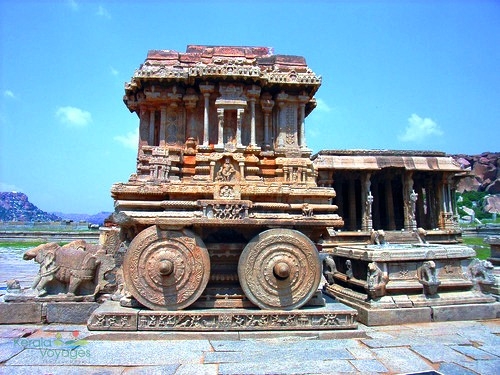 in the Chitradurga District, Karnataka, India. The fort’s name Chitrakaldurga, which means ‘picturesque fort’ in Kannada, is the namesake of the town Chitradurga and its administrative district. The Fort was built in stages between the 10th and 18th centuries by the dynastic rulers of the region, including the Rashtrakutas, Chalukyasand Hoysalas as well as the Nayakas of Chitradurga, feudal lords in the Vijayanagar Empire. The Nayakas of Chitradurga, or PalegarNayakas, were most responsible for the expansion of the fort between the 15th and 18th centuries. They were defeated by Hyder Ali at Chitradurga in 1779. Later the fort was expanded and strengthened by Hyder Ali and his son Tippu Sultan, who succeeded MadakariNayaka V, the last ruler of the Nayaka clan. The fort is built in a series of seven concentric fortification walls with various passages, a citadel, masjid, warehouses for grains and oil, water reservoirs and ancient temples. There are 18 temples in the upper fort and one huge temple in the lower fort. Among these temples the oldest and most interesting is the Hidimbeshwara temple. The masjid was an addition during Hyder Ali’s rule. The fort’s many interconnecting tanks were used to harvest rain water, and the fort was said to never suffer from a water shortage.
Day 10–Hampi (12 Kms)
After an early breakfast,drive to Hampi for a full day sightseeing of Hampi,otherwise renowned as the largest open museum.The entire city is an open museum which is praised as one of the most important Heritage Sites of India. The destruction of the Vijayanagaracapital, Hampi took almost six months for the Muslim consortium of Kings.If you finish your sightseeing by 4 PM, you may opt to visit Daroji Sloth Bear Sanctuary to watch Sloth Bears. The Sanctuary is open from 1 PM to 5.30 PM only. Back to Hospet for overnight stay.
Hampi, also known as ‘ THE FORT OF VICTORY – VIJAYANAGARA’, situated on the banks of the river Tungabhadra in the region of Bellary, is a vast site of monuments and ruins, a mute witness to an ear of glories,  triumphs and tragedies. The ruins of Hampi, are so majestic and imposing that they leave the visitor totally dumbfounded, awestruck and humbled. Visit the Virupaksha Temple, rises majestically at the western end of a 670m long street that was once the famous Hampi bazaar. This is the only temple at Hampi that is still used for worship. The most splendid monument of Hampi is undoubtedly The Vitthala Temple Complex. The 56 pillars in the main hall produce musical notes when struck. To the east of the hall is the famous Stone Chariot with stone wheels that actually revolve! Hampi is full of such surprises. The restoration and rehabilitation is still going on to bring Hampitownship to its Royal touch. Archeological survey of India takes much pain to restore the same.The Hampi Township spread over 10 kms starting from Anantashayana Temple.
You will also visit Zanana Enclave (Women’s apartments), remnants of Queen’s Palace, King’s private temple called Hazararama Temple. There is also a huge elephant shed for 13 elephants,an open long dining table made of stone with inbuilt plates and so on.Another attraction is Vijaya Vithala Temple which is no more used for worship. The architecture of this temple is amazing and the unique part is the huge stone chariot in front of the temple. No vehicles are allowed to approach the temple. There are Electric cars available at minimum costs for regular transfers up and down.
Day 11–Hospet – Bijapur (225 kms-5 Hours)
After an early breakfast,drive to Bijapur.Check into the hotel. Afternoon sightseeing of Bijapur.Visit JumaMasjid,a live Mosque, IbrahimRoza, Malik E Maidan, AliBurjetc. Overnight at Hotel.
The one-time capital of the AdilShahi kings (1489-1686), Bijapur is dotted with mosques, mausoleums, palaces, fortifications, watchtowers and strong gateways, with the massive GolGumbaz dominating the landscape for miles around. The city was established in the 10th-11th centuries by the KalyaniChalukyas and was known as Vijayapura (City of victory). The city was passed to Yadavas after Chalukya’s demise. The city came under the influence of the Khilji Sultanate in Delhi by the late 13th century. In 1347, the area was conquered by the Bahmani Sultanate of Gulbarga. By this time, the city was being referred as Vijapur or Bijapur.
 The Juma Masjid in Bijapur is massive in size and a place of public life.Many visitors enter into the Mosque irrespective of their religions and the lawns inside are being used as a public space for people to sit and chat.Its built in 16th Century and now under the protection of Archeological Survey of India.But it’s a live Mosque.It is the largest and oldest mosque in the Deccan. It is at 1200 yards to the east of the citadel. Ali Adil Shah I, after his triumphant victory over Vijayanagara built this mosque. It is a mosque, rectangle in shape, about 400 feet (120 m) from east to west and 280 feet (85 m) from north to south. The main entrance is from the east side and there is a pavilion ascribed to Aurangzeb at the entrance. Including the entire big open court spread between two wings, the mosque occupies an area of 116,300 square feet (10,800 m2) and unmatched by any building in Bijapur. The columns in the main building divide the floor into 45 equal squares. The most beautiful feature is the dome of this building which is highly proportionate. The mihrab here is gorgeously painted.
Ibrahim Rauza is a huge twin tower in which one is a Mosque and the other one is a Mausoleum of Ibrahim AdilShah.The Towers are situated in a large area with beautified landscape and gardens protected and maintained by Archeological Survey of India .Facing each other, these twin buildings have a fountain in between them. A Persian inscription here records the construction of this Rauza in 1626. These buildings stand on a raised terrace supported by arches in a large rectangular enclosure with a high entrance tower in the centre of the north side, adorned with four graceful minarets. This is the most ornate building in Bijapur.
Both the buildings have square plans with four minarets at the corners and a bulbous dome at the centre, which emerges from lotus petals. Cousins called the building as “The Taj Mahal of the Deccan”. Its a centre of public attraction in Bijapur and an excellence of Muslim Architecture.Built on a single rock bed, it is noted for the symmetry of its features . The architecture is said to be copied by Shajahan for building Taj Mahal in Agra. We may see the similarity of Architecture of both.
Malik-e-Maidan( Monarch of the Plains): The largest medieval cannon in the world. Being 4 m long, 1,5 m in diameter and weighing 55 tons, this gun was brought back from Ahmadnagar in the 17th century as a trophy of war by 400 oxen, 10 elephants and tens of men. It was placed on the SherzaBurj (Lion Gate) on a platform especially built for it. The cannon’s nozzle is fashioned into the shape of a lion’s head with open jaws & between the carved fangs is depicted an elephant being crushed to death. It is said that after igniting the cannon, the gunner would remain underwater in a tank of water on the platform to avoid the deafening explosion. The cannon remains cool even in strong sunlight and if tapped, tinkles like a bell. In 1854 the cannon was auctioned for Rs. 150 but the sale was cancelled in the end.
Day 12–Bijapur – Badami (150 kms-3 Hours)
By 6.30 AM visit GolGumbaz and return to hotel for breakfast. Later drive to Badami. Check into the hotel. By early evening you may visit the local Banashankari Temple where the female Goddess is popular among the local people. Overnight at Badami.
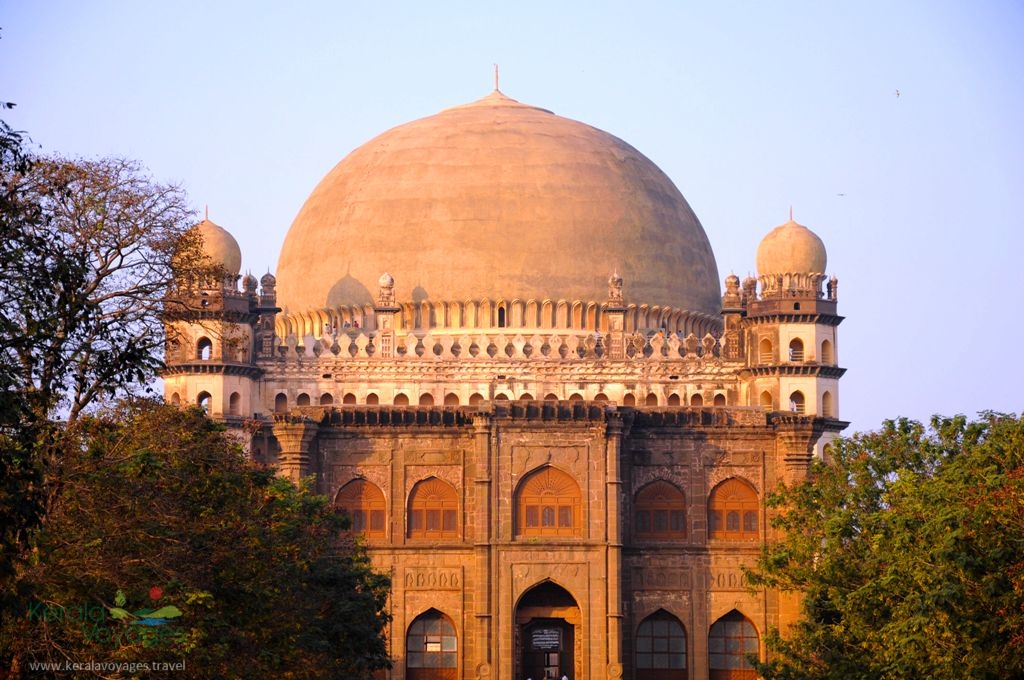
GolGumbaz is the most famous monument in Bijapur. It is the tomb of Mohammed AdilShah. It is the largest dome ever built, next in size only to St Peter’s Basilica in Rome.A particular attraction in this monument is the central chamber, where every sound is echoed seven times. Another attraction at the GolGumbaz is the Whispering Gallery, where even minute sounds can be heard clearly 37 metres away. GolGumbaz complex includes a mosque, a NaqqarKhana (a hall for the trumpeters) (Now it is used as museum) and the ruins of guest houses. It has an area of 1706 Sq.Mtrs. The best time to visit this monument is early morning before the crowd starts entering. This will give you a chance to experience the echo effects of the Central Chamber and Whispering Gallery.
Day 13–Badami – Aihole – Pattadakallu
After breakfast,drive to Aihole&Pattadackal, famous as the ‘Cradle of Hindu Temple Architecture’ . Return to Badami for sightseeing. Overnight at Hotel.
Off the beaten track of modern civilisations, situated on the banks of Malaprabhariver, is a little village known as Aihole, originally known as  Ayyavole. The place name has a legendary origin associated with Parashurama, who having destroyed the whole race of Kshatriyas came to Malaprabha river to clean his bloodstained axe. Its said that the river turned red on washing the axe and at the sight of red water he cried out “Ai Holi! Ai Holi!”. Thus the place came to be known as Aihole.
Aihole has over 100 temples scattered around the village. Wherever one looks, it’s temples that meet the eyes. Intricately carved, rich in detail, quiet and peaceful. Mute witnesses of a bygone era. Visit the oldest temple here is, perhaps, the Lad Khantemple dating back to the 5th century. The Durga Temple in Aihole is decidedly one of the finest specimens belonging to the late 7thcentury. It outbids the rest of the shrines both in artistic form and aesthetic sense. It has an undivided chamber and is unique as its built on the lines of Buddhist Chaitya with an apsidal shaped cella over which rises a little spire or shikhara. The outer walls of the shrine have beautifully carved figures or Narasimha, Mahishaasuramardini, Varaha, Vishnu, Shiva and Ardanarishwara.You may also visit the museum at Aihole.Another piece of attraction is HuchchappayanaMathaTemple.The temple has sculptures on its outer walls. The doorframe of the Garbhagriha is very well wrought with Ganga and Yamuna images. There are also some impressive figures of amorous couples.
The group of monuments at Pattadakal is a splendid contribution of Chalukyas of Badami, lies on the left bank of river Malaprabha amidst a rugged yet picturesque landscape. Aihole was an important centre of early Western Chalukya Kings from 6th to 8 Century. It gained cultural glory in 7th Century A.D.Since then several temples were built by Rastrakuta and Chalukya dynasties. According to historians and scholars,the architecture skill of Badami Chalukya was evolved in Aihole and developed in Badami and further reached its pinnacle in terms of growth and perfection at Pattadakallu. The name Pattadakallu derived as this was the crowning place for Princes. Most of the temples at Pattadkal were built by the early Chalukyas.
Badamihas four rock-cut cave temples, the largest being the third cave 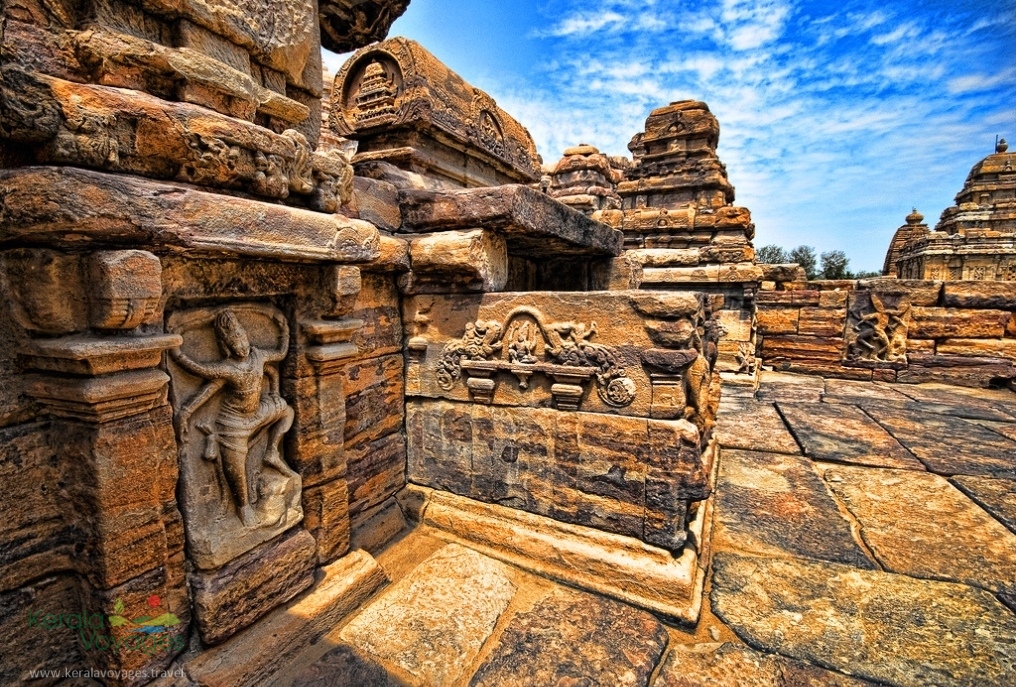 dedicated to Vishnu. Overlooking the temples is a reservoir, its banks dotted with temples dedicated to Vishnu and Shiva. The Bhutanatha Temples and the Museum set up by the Archeological Survey of India, are the other attractions. The Menabasadis are carved in the mega rocks of Badami Hills.
The Badami Chalukyas bestowed cultural and religious tolerance which made the Jain,Buddha,Vaishnava and Shaiva Monks and scholars visited and resided in Badami. Instead of residing in the Palace,they opted Cave temples which were situated amidst nature,a suitable place for their holy service. The Cave temples are evidently rich in Architecture which depicts the rock cut skill and technology of the period. They were the initialmodeled temples and independently built termed as earlier styled or infant models. They provided a blue print to the later built similar model temples in and around Southern India and helped to develop and sharpen the skill.
Day 14-Badami-Goa (325 Kms-8 Hours)
After an early breakfast,drive to Goa.On arrival check into the hotel after a long journey. Rest of the day free to relax. Overnight at Hotel.
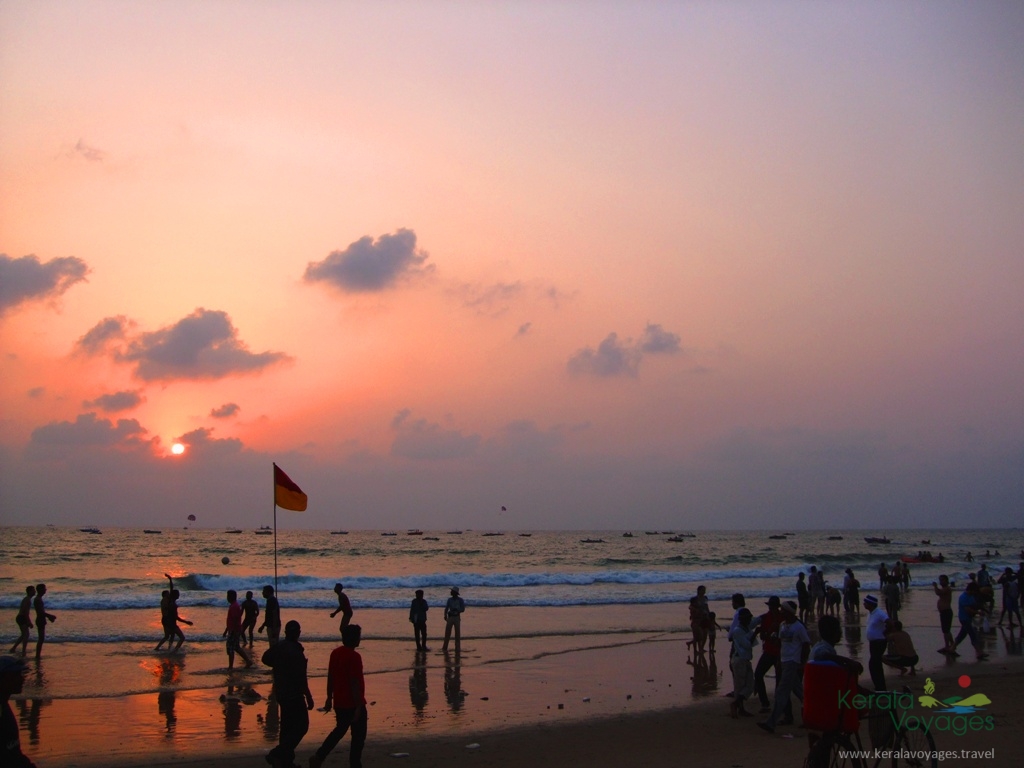 Panaji is the official capital of Goa. It was called Panjim during the times of the Portuguese and was one of the three principal Portuguese cities along with Velha Goa (Old Goa) and Margao. Though it began as a suburb of Velha Goa it ended up becoming the capital of Goa in 1843 when the Portuguese Old Goa. It is also one of India’s smallest and most charming state capitals. The places to visit in Goa are Basilica of Bom Jesus, Goa State Museum, Church of St.Augustine Ruins, Braganza House etc…
Day 15-Goa
You may opt to go for a half day city tour of Goa. Full day at leisure on beach. Overnight at Hotel.
Day 16-Goa
Full day at leisure on beach.Overnight at Hotel.
Day 17-Goa
Full day at leisure on beach.Overnight at Hotel.
Day 18-Goa – Mumbai (By Air)
Today you will take a flight to Mumbai.On arrival in Mumbai, you will be transferred to your hotel. Afternoon option for shopping in the City. Overnight at hotel.
Day 19-Mumbai
Breakfast at the hotel. Later procced for a guided sightseeing tour of Bombay visiting the Colaba, Gateway of India, Dhobi Ghat, The Prince of Wales museum, Victoria Terminus Rail Station, Marine drive & Mani Bhavan. Overnight in Bombay.
The unofficial headquarters of Mumbai’s tourist scene, Colaba sprawls down the city’s southernmost peninsula. It’s a bustling district packed with street stalls, markets, bars and budget to midrange lodgings. Colaba Causeway (ShahidBhagat Singh Marg) bisects the promontory and is the traffic-filled artery connecting Colaba’s jumble of side streets and gently crumbling mansions.Sassoon Dock, south of the main tourist action, is a scene of intense and pungent activity at dawn (around 05:00) when colourfully clad 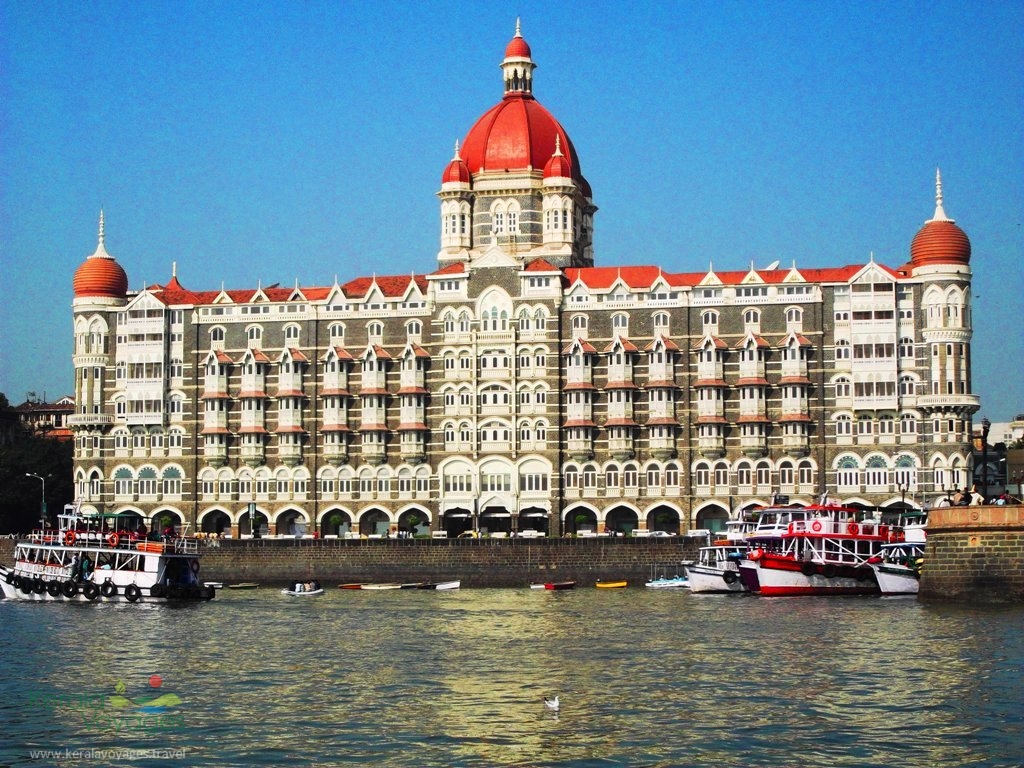 Koli fisherwomen sort the catch unloaded from fishing boats at the quay. The fish drying in the sun are bombil, the fish used in the dish Bombay duck. Photography at the dock is forbidden without permission from the Mumbai Port Trust.
Dhobi Ghat is a well known open air laundromat in Mumbai, India. The washers, locally known as Dhobis, work in the open to wash the clothes from Mumbai’s hotels and hospitals. There are rows of open-air concrete wash pens, each fitted with its own flogging stone. Called the world’s largest outdoor laundry, Dhobi Ghat is a very popular attraction among foreign tourists.The word Dhobi Ghat is used all over India to refer to any place where many washers are present.
ChatrapatiShivajiMaharajVastuSangrahalaya , formerly known as The Prince of Wales Museum, is a Grade I Heritage Building of the city. It has been awarded first place for Heritage Building Maintenance by the Indian Heritage Society. The Key Gallery, located in the central foyer, showcases a representative collection from the various sections of the Museum such as Archaeology, Indian Miniature Paintings, Indian Decorative Arts and the Chinese and Japanese collection. It thus gives an overview of the Museum’s rich collection.
Day 20 – Mumbai Departure
Like all good things,your holiday experience comes to an end but you will always carry with you memories of this unique and unforgettable experience.Today, you will be assisted and transferred to Mumbai International airport for your flight home!!


