- Company
- About Us
- Brand Story
- Our Team
- Testimonials
- Ethical Code
- Sustainable Tourism
- Sustainable Tourism Mission Statement
- Corporate Sustainability Policy
- The carbon footprint of tourism
- Sustainability Feedback
- Dos & Don’ts
- Related Links to Sustainable Tourism
- Safe Travels Protocols
- Sustainability Guidelines for Activities
- Fair Trade Division
- Case Study : Keralavoyages
- Sustainability Progress Report
- Awards & Acknowledgements
- Sustainable Policies
- Privacy Policy
- Contact
- Services
- TRAVELERS PICK
- Sustainable Itineraries
- Tours in India
- Day Programs
- Special interest tours in India
- Luxury Tours in India
- Beach Holidays
- Culture, Tradition and Lifestyle
- Nature Trails
- Women Tours
- Family Holidays
- Nature Walks and Wildlife Safaris in India
- Backwater Tours in Kerala
- Ayurveda Holidays in Kerala
- Trekking & Camping
- Temple Tours in India
- Birding Tours in the Western Ghats
- Art Forms & Festival tours
- Tribal Village Tours in India
- Heritage Tours in India
- History & Archeology Tours in India
- Special accommodations in South India
- Active Holidays
- 12 Days Kerala, Karnataka and Goa
- 7N Multiple Days Trekking and Camping in Munnar
- Nature Walks & Wildlife – Western Ghats Birding & Safaris
- Nature Treks & Wildlife Safaris – Western Ghats Birding & Safaris Shorter Version
- Cycling & Trekking in Kerala – 15 days activity tour in Kerala
- 5 days trekking and staying at Jungle Lodges in Chinnar Wildlife Sanctuary, Munnar
- 14 Days Western Ghats – Nature Walks, cycling & Wildlife Safaris
- MICE
- Destination Wedding
- Destinations
- Exclusive
- Contact



Deccan Tour with Mumbai and Ajanta-Ellora-Hampi Special-German Series
The below itinerary is featured in the brochure of our German Partner for fixed departures.
Duration: 15 Days
Book Now!Day 01 – Bangalore-Mysore (150 kms-3.5Hours drive)
On arrival at early morning, you will be transferred to an Airport hotel for taking rest. Later after a leisurely breakfast, drive to Mysore, the Palace city of South India. On arrival in Mysore, check into your hotel. Afternoon visit Maharaja’s Palace and later vegetable market. Overnight at the Hotel.
Maharaja’s Palace is a synonym for Mysore in the Tourist Map. Its built in Indo-Saracenic style with domes, turrets, arches and colonnades. The Palace is a treasure house of exquisite carvings and works of art from all over the world. The walled Palace complex houses the Residential Museum, temples and shrines including Shwetha Varahaswamy Temple. The jewel studded golden throne, the pride of the Wodeyars and the symbol of their sovereignity, displayed here during Dussehra festival in October. The Palace will be lit with One Hundred Thousand electric bulbs on Sundays and Public Holidays.
Mysore, the capital city of the Wodeyars has always enchanted its admirers with its quaint charm, rich heritage, magnificent palaces, beautifully laid-out gardens, imposing buildings, broad shady avenues and sacred temples. There’s an old world charm about the city that reaches out and leaves no one untouched. Visit the palace of the Maharaja built in 1911-12. The palace is of harmonious syntheses of the Hindu and Saracenic styles of architecture with archways, domes, turrets, colonnades and sculptures which are magnificent. Visit the Art Gallery; drive up to Chamundi hill to see Chamundeshwari Temple & a panoramic view of Mysore. On the way back, see the Nandi Bull. Mysore is known the world over for its exotic sandalwood and rich silks. Mysore, an undulating tableland, covered in parts by granite outcrops and fringed by verdant forests, offering several attractions ranging from the royal splendor of Mysore City and its fabulous Dasara Festival to exquisite temples, pilgrimage centres and scenic spots
Day 02 – Mysore
Full day to explore Mysore. After breakfast, drive to Somnathpur. Enroute visit Chamundi hills from the foothills. Later visit Fort Sri rangapatnam, Tipu’s summer Palace. Return to your hotel for overnight stay. You may opt to go walking for local shopping etc.
Somnathpur, a tiny village on the banks of the Kaveri, 140 kms, south-west of Bangalore. This place boasts of one of the last and the grandest of Hoysalamonuments – the Kesava Temple. The riches and splendour of the Hoysala court were already evident in their grandtemples at Belur and Dvarasamudra (present day, Halebid).The temple, however, was built by this celebrated army commander, Somnath. Some year ago he had founded a village on the left bank of the Kaveri River, which he named Somnathpur, after himself. All the facts are duly mentioned on the slab in old Kannada script and appear as though to have happened yesterday! Somnathpur is more representative of the age, since it did not suffer destruction as much as Belur and Halebid did and hence offers a more unbroken view of period’s architecture. Often it is referred to as the poor cousin of Belur and Halebid. Its unique design and perfect symmetry are ignored amidst the farms and agricultural lands of surrounding villages.
The island fortress of the legendary warrior king Tipu Sultan, Srirangapatna is just 16km from Mysore city. Inside the fortress is Tipu’s mosque with its twin minarets, the celebrated Ranganatha Swamy Temple, Tipu’s Summer Palace, the Wellesley Bridge, and the dungeons where British officers were once imprisoned. Equally impressive is the ornate white-domed Gumbaz, an imposing structure with doors of ebony inlaid with ivory and lacquered with Tipu’s tiger-striped emblem. About 1km to the east of the fort is Tipu’s Summer Palace (known as the Daria Daulat Bagh) set amidst a lovely garden.
Day 03 –Mysore-Hassan (125 kms-3 Hours drive)
After breakfast, drive to Hassan. Check into your hotel on arrival. Afternoon visit Belur Channakeshava & Halebid Hoysalewswara temples famous for its Hoysala Architecture using the soft stone with amazing hand craft. Overnight at the Hotel.
The temples at Belur and Halebid, which remained incomplete despite 80 years of labor, are offerings of the finest workmanship in stone to the gods. The elaborate sculptured decoration on the temple, according to some critics, is even better than the Friezes at Konark in Orissa and Khajuraho in Madhya Pradesh. The Temple at Halebid is still used for worship today. Belur was the capital of the Hoysalas during the 11th and 12th centuries, before the capital was moved to Halebid. The thing not to be missed here is the impressive Chennakeshava Temple, which has some of the most intricate and beautiful carvings in India. The Channa keshava temple at Belur, which was (the earlier Capital of Hoysala Kingdom) built by the emperor Vishnuvardhana, during 1117 AD to commemorate his conversion from Jainism to Vaishnavism, has attracted connoisseurs of art the World over, through its intricate sculpting wonders. Hoysaleshvara temple Halebidis a 12th century Hoysala temple , the old Hoysala capital.
Day 04–Hassan-Hospet (300 Kms-6 Hours)
After an early breakfast, drive to Hospet. En route visit Chitradurga Fort from the foothills. Arrive early evening in Hospet,check in your hotel. Overnight at Hotel.
Day 05–Hampi (12 Kms)
After an early breakfast, drive to Hampi for a full day sightseeing of Hampi, otherwise renowned as the largest open museum. The entire city is an open museum which is praised as one of the most important Heritage Sites of India. The destruction of the Vijayanagara capital, Hampi took almost six months for the Muslim consortium of Kings.If you finish your sightseeing by 4 PM,you may opt to visit Daroji Sloth Bear Sanctuary to watch Sloth Bears.The Sanctuary is open from 1 PM to 5.30 PM only. Back to Hospet for overnight stay.
Hampi, also known as ‘ THE FORT OF VICTORY – VIJAYANAGARA’, situated on the banks of the river Tungabhadra in the region of Bellary, is a vast site of monuments and ruins, a mute witness to an ear of glories, triumphs and tragedies. The ruins of Hampi, are so majestic and imposing that they leave the visitor totally dumbfounded, awestruck and humbled. Visit the Virupaksha Temple, rises majestically at the western end of a 670m long street that was once the famous Hampi bazaar. This is the only temple at Hampi that is still used for worship. The most splendid monument of Hampi is undoubtedly The Vitthala Temple Complex. The 56 pillars in the main hall produce musical notes when struck. To the east of the hall is the famous Stone Chariot with stone wheels that actually revolve! Hampi is full of such surprises. The restoration and rehabilitation is still going on to bring Hampi township to its Royal touch. Archeological survey of India takes much pain to restore the same. The Hampi Township spread over 10 kms starting from Anantashayana Temple.
You will also visit Zanana Enclave (Women’s apartments),remnants of Queen’s Palace, King’s private temple called Hazararama Temple. There is also a huge elephant shed for 13 elephants, an open long dining table made of stone with inbuilt plates and so on. Another attraction is Vijaya Vithala Temple which is no more used for worship. The architecture of this temple is amazing and the unique part is the huge stone chariot in front of the temple. No vehicles are allowed to approach the temple. There are Electric cars available at minimum costs for regular transfers up and down.
Day06–Hospet-Badami (150 kms-3 Hours)
After break fast, drive Badami. Afternoon visit Aihole & Pattadackal, famous as the ‘Cradle of Hindu Temple Architecture’. Overnight at Badami.
Off the beaten track of modern civilisations, situated on the banks of Malaprabhariver, is a little village known as Aihole, originally known as Ayyavole.The place name has a legendary origin associated with Parashurama, who having destroyed the whole race of Kshatriyas came to Malaprabha river to clean his bloodstained axe. Its said that the river turned red on washing the axe and at the sight of red water he cried out “Ai Holi! Ai Holi!”.Thus the place came to be known as Aihole.
Aihole has over 100 temples scattered around the village. Wherever one looks, it’s temples that meet the eyes. Intricately carved, rich in detail, quiet and peaceful. Mute witnesses of a bygone era. Visit the oldest temple here is, perhaps, the Lad Khan temple dating back to the 5th century. The Durga Temple in Aihole is decidedly one of the finest specimens belonging to the late 7thcentury.It outbids the rest of the shrines both in artistic form and aesthetic sense.
It has an undivided chamber and is unique as its built on the lines of Buddhist Chaitya with an apsidal shaped cella over which rises a little spire or shikhara. The outer walls of the shrine have beautifully carved figures or Narasimha, Mahishaasuramardini, Varaha, Vishnu, Shiva and Ardanarishwara. You may also visit the museum at Aihole. Another piece of attraction is Huchchappayana MathaTemple. The temple has sculptures on its outer walls. The doorframe of the Garbhagriha is very well wrought with Ganga and Yamuna images. There are also some impressive figures of amorous couples.
The group of monuments at Pattadakal is a splendid contribution of Chalukyas of Badami, lies on the left bank of river Malaprabha amidst a rugged yet picturesque landscape. Aihole was an important centre of early Western Chalukya Kings from 6th to 8 Century. It gained cultural glory in 7th Century A.D. Since then several temples were built by Rastrakuta and Chalukyadynasties. According to historians and scholars, the architecture skill of Badami Chalukya was evolved in Aihole and developed in Badami and further reached its pinnacle in terms of growth and perfection at Pattadakallu. The name Pattadakallu derived as this was the crowning place for Princes.Most of the temples at Pattadkal were built by the early Chalukyas.
Day07–Badami-Goa( 300 kms-7Hours Drive)
After an early breakfast, check out and visit the cave temples in Badami. Later drive to Goa. En route visit Belgaum Fort and the Jain temple inside the Fort. On arrival, check in at your hotel in Goa. Overnight at Hotel.
Badami has four rock-cut cave temples, the largest being the third cave dedicated to Vishnu. Overlooking the temples is a reservoir, its banks dotted with temples dedicated to Vishnu and Shiva. The Bhutanatha Temples and the Museum set up by the Archeological Survey of India, are the other attractions. TheMenabasadis are carved in the mega rocks of Badami Hills.
The Badami Chalukyas bestowed cultural and religious tolerance which made the Jain, Buddha, Vaishnava and Shaiva Monks and scholars visited and resided in Badami. Instead of residing in the Palace, they opted Cave temples which were situated amidst nature, a suitable place for their holy service. The Cave temples are evidently rich in Architecture which depicts the rock cut skill and technology of the period. They were the initial modeled temples and independently built termed as earlier styled or infant models. They provided a blue print to the later built similar model temples in and around Southern India and helped to develop and sharpen the skill.
Belgaum is located in the foothills of the Western Ghats, it enjoys a cool, salubrious climate and is surrounded by natural beauty in the form of rivers, hills and dense evergreen forests. In the vicinity there are popular historical sites, temples and churches exist in and around the city, most notably the Kamala Basti fort, Kapileshwar temple (South Kashi), kitturfort, Suvarnasoudha etc.
Day 08-Goa
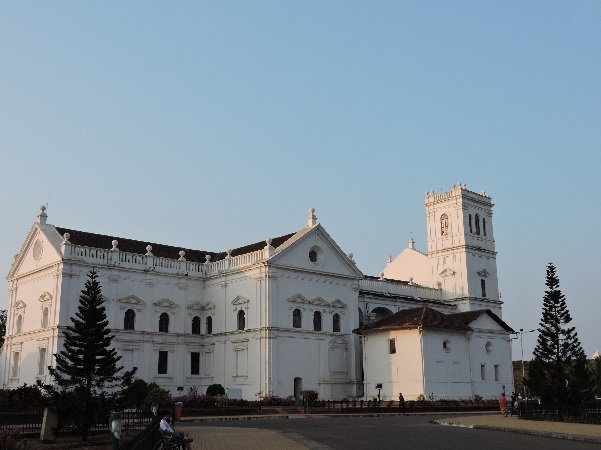
Breakfast at the hotel. Afternoon go for a sightseeing of Old Goa to visit the historic churches like the chapel of St Catherine, Basilica of Bom Jesus and other old churches around etc.You will driving over River Mandovi. Overnight at Hotel.
Panaji is the official capital of Goa. It was called Panjim during the times of the Portuguese and was one of the three principal Portuguese cities along with Velha Goa (Old Goa) and Margao. Though it began as a suburb of Velha Goa it ended up becoming the capital of Goa in 1843 when the Portuguese Old Goa. It is also one of India’s smallest and most charming state capitals.
Day09-Goa
Full day at leisure on beach. Overnight at Hotel.
Day 10-Goa-Mumbai
After breakfast, you will be transferred to Goa Airport to board your flight to Mumbai .On arrival in Mumbai,you will be transferred to your hotel. Evening for free walks or shopping. Overnight at hotel.
Day 11-Heritage Walk + Elephanta Caves UNESCO World Heritage Site
After breakfast, you will be transferred by Mumbai Taxi to Gateway of India for a heritage walk for two hours and later reach the Ferry point to board your ferry to Elephanta Caves.Early evening return to your hotel. Evening for own exploration. Overnight at hotel.
On this heritage walk, you will see a veritable parade of archetypal Neo-Gothic public buildings built in the 1860s & 70s such as the glorious Bombay University Library with its high campanile and the grand imposing High Court that are South Mumbai’s main architectural attraction. Fronting this line of historic Gothic edifices across the open space of Oval Maidan is a row of superb 1930s Art Deco apartment buildings making this a marvellously unique setting both visually and architecturally. A heritage walk through the highlights of South Mumbai will take you through a Colonial feel of the Metro City. You will cover the highlights like Gateway Of India, Taj Mahal Palace, Cathedral of Holy Name, State Police Head Quarters, Prince Wales Museum from out side, Mumbai University from outside, Mumbai High Court Building and Western Railway Head Quarters.
Elephanta Caves is UNESCO World Heritage site is a fine specimen of rock cut architecture and art of medieval India. Elephanta is easily one among the most enigmatic heritage sites in India. Who created this spectacular sculptural and architectural feast is still mysterious. Elephanta represents the pinnacle of rock cut architecture and sculptural art medieval India achieved. Despite the mindless destruction, Elephanta’s art suffered during the colonial past, it still reserves the right to awestruck any ordinary visitors. Elephanta island stands in stark contrast with hectic Mumbai city, which is an hours ferry ride away..
Day 12-Mumbai
Breakfast at the hotel. Later procced for a guided sightseeing tour of Bombay visiting the Dhobi Ghat, The Prince of Wales museum, Victoria Terminus Rail Station etc. Early evening back to hotel. Dinner on own. Later after dinner, you will be transferred to Mumbai International Airport for departure.
The unofficial headquarters of Mumbai’s tourist scene, Colaba sprawls down the city’s southernmost peninsula. It’s a bustling district packed with street stalls, markets, bars and budget to midrange lodgings. Colaba Causeway (Shahid Bhagat Singh Marg) bisects the promontory and is the traffic-filled artery connecting Colaba’s jumble of side streets and gently crumbling mansions. Sassoon Dock, south of the main tourist action, is a scene of intense and pungent activity at dawn (around 05:00) when colourfully clad Koli fisherwomen sort the catch unloaded from fishing boats at the quay. The fish drying in the sun are bombil, the fish used in the dish Bombay duck. Photography at the dock is forbidden without permission from the Mumbai Port Trust.
Dhobi Ghat is a well known open air laundromat in Mumbai, India. The washers, locally known as Dhobis, work in the open to wash the clothes from Mumbai’s hotels and hospitals. There are rows of open-air concrete wash pens, each fitted with its own flogging stone. Called the world’s largest outdoor laundry, Dhobi Ghat is a very popular attraction among foreign tourists.The word Dhobi Ghat is used all over India to refer to any place where many washers are present.
Chatrapati Shivaji Maharaj Vastu Sangrahalaya ,formerly known as The Prince of Wales Museum, is a Grade I Heritage Building of the city. It has been awarded first place for Heritage Building Maintenance by the Indian Heritage Society. The Key Gallery, located in the central foyer, showcases a representative collection from the various sections of the Museum such as Archaeology, Indian Miniature Paintings, Indian Decorative Arts and the Chinese and Japanese collection. It thus gives an overview of the Museum’s rich collection.
Ajanta-Ellora Extension
Day 13 –Mumbai-Aurangabad (By Air)
Today you will be transferred to Mumbai Airport to connect your flight to Aurangabad. Afternoon visit the Ellora Caves (15 kms), one of the highly visited World Heritage sites of India, Daulatabad Fort etc. Overnight at Hotel
The name Ellora itself inspires everyone as it represents one of the largest rock-hewn monastic-temple complexes in the entire world. Ellora is also world famous for the largest single monolithic excavation in the world, the great Kailasa (Cave 16). The visit to these caves is enjoyed maximum during monsoon, when every stream is filled with rainwater, and the entire environ is lush green. The monsoon is not only a season of rains in this part, the local visitors are attracted to visit these ideal locations to have a glimpse of the mother nature in full bloom.
The caves are hewn out of the volcanic basaltic formation of Maharasthra, known as ‘Deccan Trap’, the term trap being of Scandinavian origin representing the step like formation of the volcanic deposits. The rock formation, on weathering has given rise to the appearance of terraces with flat summits. At Ellora, one can also have a glimpse of the channels (near Cave 32) through which the volcanic lava once flowed. These channels, due to overheating, have a characteristic brownish red colour. Similar rock was used in the construction of the Grishneshwar Temple nearby and also utilised for the flooring of the pathways at Bibi-ka-Maqbara.
Day 14 –Aurangabad-Ajanta (100 kms-2 Hours)
AJANTA is world’s greatest historical monument recognized by UNESCO. There are 30 caves in Ajanta of which 9, 10, 19, 26 and 29 are chaitya-grihas and the rest are monasteries. These caves were discovered in AD 1819 and were built up in the earlier 2nd century BC-AD. Most of the paintings in Ajanta are right from 2nd century BC-AD and some of them about the fifth century AD and continued for the next two centuries. All paintings shows heavy religious influence and centre around Buddha, Bodhisattvas, incidents from the life of Buddha and the Jatakas. Conjures before one’s vision, a dream of beauty- of caves, hidden in the midst of a lonely glen with a streamlet flowing down below, caves that were scooped out into the heart of the rock so that the pious Buddhist monk, out on mission to spread the tenets of Buddhism could dwell and pray, caves that the followers of Lord Buddha, embellished with architectural details with a skilful command of the hammer over the chisel, with sculpture of highest craftsmanship and above all, with the paintings of infinite charm. At Ajanta, the paintings on the walls, illustrate the events in the life of prince Gautama Buddha, the founder of Buddhism and in the more popular Jatakas stories pertaining to Buddha’s previous incarnation. According to the older conceptions, the Buddha wrought many deeds of kindness and mercy in a long series of transmigration as a Bodhisattva, before achieving his final birth as the sage of sakyas. Incidentally they contain the scenes of semi-mythological history, the royal court and popular life of the ancient times, as told in romances and plays. Some pictures recall the Greek and Roman compositions and proportions, few late resemble to Chinese manners to some extent. But majority belongs to a phase, which is purely Indian, as they are found nowhere else. These monuments were constructed during two different periods of time separated by a long interval of four centuries. The older ones were the product of last to centuries before Christ and belong to Hinayana period of Buddhism in later part of 2nd century AD when Buddhism was divided into two sections, after the conduct of the fourth general council under another great king, Kanishka.
Day 15–Aurangabad-Mumbai (By Air) Departure
Today you will be transferred to Aurangabad Airport to connect your flight to Mumbai. On arrival in Mumbai, you will be transferred to an Airport Hotel for freshen up and rest.BY late evening you will be transferred to Mumbai Airport for departure home.
 Call/ WhatsApp: +91 – 94470 34631 (English)
Call/ WhatsApp: +91 – 98959 00500 (English & German)


