- Company
- About Us
- Brand Story
- Our Team
- Testimonials
- Ethical Code
- Sustainable Tourism
- Sustainable Tourism Mission Statement
- Corporate Sustainability Policy
- The carbon footprint of tourism
- Sustainability Feedback
- Dos & Don’ts
- Related Links to Sustainable Tourism
- Safe Travels Protocols
- Sustainability Guidelines for Activities
- Fair Trade Division
- Case Study : Keralavoyages
- Sustainability Progress Report
- Awards & Acknowledgements
- Sustainable Policies
- Privacy Policy
- Contact
- Services
- TRAVELERS PICK
- Sustainable Itineraries
- Tours in India
- Day Programs
- Special interest tours in India
- Luxury Tours in India
- Beach Holidays
- Culture, Tradition and Lifestyle
- Nature Trails
- Women Tours
- Family Holidays
- Nature Walks and Wildlife Safaris in India
- Backwater Tours in Kerala
- Ayurveda Holidays in Kerala
- Trekking & Camping
- Temple Tours in India
- Birding Tours in the Western Ghats
- Art Forms & Festival tours
- Tribal Village Tours in India
- Heritage Tours in India
- History & Archeology Tours in India
- Special accommodations in South India
- Active Holidays
- 12 Days Kerala, Karnataka and Goa
- 7N Multiple Days Trekking and Camping in Munnar
- Nature Walks & Wildlife – Western Ghats Birding & Safaris
- Nature Treks & Wildlife Safaris – Western Ghats Birding & Safaris Shorter Version
- Cycling & Trekking in Kerala – 15 days activity tour in Kerala
- 5 days trekking and staying at Jungle Lodges in Chinnar Wildlife Sanctuary, Munnar
- 14 Days Western Ghats – Nature Walks, cycling & Wildlife Safaris
- MICE
- Destination Wedding
- Destinations
- Exclusive
- Contact



Coorg, Udupi, Gokarna, Badami, Hospet, Hassan, Bangalore travel plan for Ms. Giuliana – Italy
Travelers Pick - Proven itineraries.
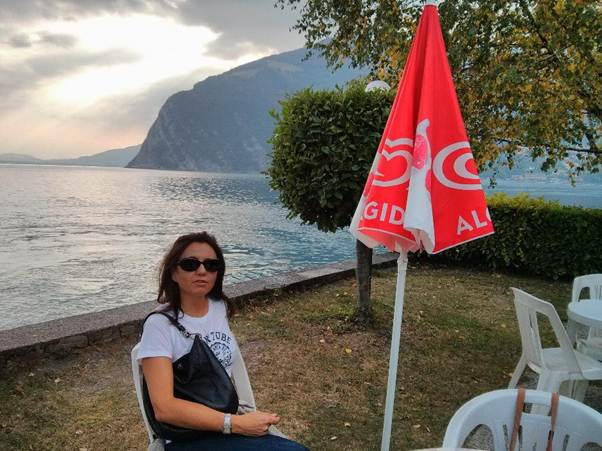
“The tour was perfect. We felt always at ease. Great professionalism in the organization” — Ms. Giuliana – Italy
02 Jan –Bangalore –Coorg (Madikeri)-5 Hour drive
After an early breakfast, drive to Bylakkuppe to visit the Tibetan Monastery. Later continue to Coorg, a unique agricultural village in Karnataka State of South India. Coorg is the modern name for Kodagu, the land of Kodavas. Overnight at the Resort.
Tibetan Monastery: His Holiness, Pema Norbu Rinpoche, established Namdroling Monastery shortly after he came to India from Tibet. His Holiness the Dalai Lama consecrated the spot and bequeathed the name “Namdroling Monastery.” Today the monastery is home to nearly 5000 monks and nuns, renowned as a center for the pure upholding of the teachings of the Buddha. Now, the Namdroling Nyingmapa Monastery is the largest teaching center of Nyingmapa; a lineage of Tibetan Buddhism in the world. The monastery is home to a sangha community of over five thousand monks and nuns, a religious college (or shedra) and hospital. The huge investment of time and energy made by Penor Rinpoche to build his monastery has borne abundant fruit. Among those who have studied, or are studying, at the monastery, are all the major lineage holding tulkus and lamas of the Palyul tradition, including the fifth Karma Kuchen Rinpoche, the third Choktrul Rinpoche and the third Rago Choktrul. Their spiritual training is directed and guided by Penor Rinpoche himself. Namdroling Monastery in Bylakuppe also has a retreat centre, opened in 1985, where thirty monks undergo an intensive three-year retreat. Penor Rinpoche personally instructs them in the Dzogchen Longchen Nyingtik cycle. Every autumn, according to the tradition of the Palyul Monastery, he gives instructions on Ngondro, Tsalung and Dzogchen from the Namcho cycle of Terton Mingyur Dorje. Students attend this one month retreat from the Institute, monks from the monastery and lay people. It was Penor Rinpoche’s dream, and something he continues to emphasize, that students would be able to combine in-depth, intensive study with practice, and now the monastery offers the perfect setting in which to do this. It is a must visit for those interested in Buddhism and its philosophy or just in general to see the hub of the burgeoning of Buddhism in India.
Kodagu District is home to the native speakers of Kodava language. Though the language has no script, recently German linguist Gregg M. Cox developed a new writing system for the language known as the Coorgi-Cox alphabet, used by a number of individuals within Kodagu. The Kodavas were the earliest agriculturists in Kodagu, having lived there for centuries. During this time, South Indian dynasties such as the Kadambas, the Gangas, the Cholas, the Chalukyas, the Rastrakutas, the Hoysalas, the Vijaynagar Rayas and Kodagu was a separate kingdom. Despite the Kodavas being known in India as “brave warriors” and members of the Indian warrior caste, Kodagu did not have indigenous rulers for long they appointed outsider as an administrator still answerable to the kodava chiefs.
The citizens of Kodagu are polytheists and worship a number of deities, some of them being Iggutappa, Bhagwathi, Mahadeva, Bhadrakali, Subramanya and Ayyappa. Various occupations adopted by the ethnic groups of Kodagu are: Pepper and Coffee plantations, Paddy, artisans, basket and mat-weavers, drummers, wandering musicians, farmers, toddy-makers, etc. Agriculture is the most important factor that upholds the economy of Kodagu and the main crops cultivated in this region are rice and coffee.
03 Jan –Coorg-Udupi- 4.5 Hour drive
After breakfast, drive to Udupi via Mangalore. Afternoon at leisure in Udupi. Overnight at Hotel.
04 Jan –Udupi-Jog Falls-Gokarna – 4 Hour drive
After breakfast, drive to Jog Falls and later to Gokarna to check into a beach resort. Overnight at the resort.
05 Jan –Gokarna
Full day at leisure. Overnight at the resort.
06 Jan–Gokarna-Badami (6 Hours)
After an early breakfast, drive to Badami. Afternoon visit Badami caves. Overnight at Badami.
Badami has four rock-cut cave temples, the largest being the third cave dedicated to Vishnu. Overlooking the temples is a reservoir, its banks dotted with temples dedicated to Vishnu and Shiva. The Bhutanatha Temples and the Museum set up by the Archeological Survey of India are the other attractions. The Menabasadis are carved in the mega rocks of Badami Hills.
The Badami Chalukyas bestowed cultural and religious tolerance which made the Jain, Buddha, Vaishnava and Shaiva Monks and scholars visited and resided in Badami. Instead of residing in the Palace, they opted Cave temples which were situated amidst nature, a suitable place for their holy service. The Cave temples are evidently rich in Architecture which depicts the rock cut skill and technology of the period. They were the initial modeled temples and independently built termed as earlier styled or infant models. They provided a blue print to the later built similar model temples in and around Southern India and helped to develop and sharpen the skill.
07 Jan–Badami-Hospet (3 Hours)
After breakfast, check out and visit Aihole & Pattadackal, famous as the ‘Cradle of Hindu Temple Architecture’. Later drive to Hospet. Overnight at Hotel.
Off the beaten track of modern civilizations, situated on the banks of Malaprabha river, is a little village known as Aihole, originally known as Ayyavole. The place name has a legendary origin associated with Parashurama, who having destroyed the whole race of Kshatriyas came to Malaprabha River to clean his bloodstained axe. It’s said that the river turned red on washing the axe and at the sight of red water he cried out “Ai Holi! Ai Holi!” Thus the place came to be known as Aihole.
Aihole has over 100 temples scattered around the village. Wherever one looks, it’s temples that meet the eyes. Intricately carved, rich in detail, quiet and peaceful. Mute witnesses of a bygone era. Visit the oldest temple here is, perhaps, the Lad Khan temple dating back to the 5th century. The Durga Temple in Aihole is decidedly one of the finest specimens belonging to the late 7th century. It outbids the rest of the shrines both in artistic form and aesthetic sense. It has an undivided chamber and is unique as its built on the lines of Buddhist Chaitya with an apsidal shaped cellar over which rises a little spire or shikhara. The outer walls of the shrine have beautifully carved figures or Narasimha, Mahishaasuramardini, Varaha, Vishnu, Shiva and Ardanarishwara. You may also visit the museum at Aihole. Another piece of attraction is Huchchappayana Matha Temple. The temple has sculptures on its outer walls. The doorframe of the Garbhagriha is very well wrought with Ganga and Yamuna images. There are also some impressive figures of amorous couples.
The group of monuments at Pattadakal is a splendid contribution of Chalukyas of Badami, lies on the left bank of river Malaprabha amidst a rugged yet picturesque landscape. Aihole was an important centre of early Western Chalukya Kings from 6th to 8 Century. It gained cultural glory in 7th Century A.D. Since then several temples were built by Rastrakuta and Chalukya dynasties. According to historians and scholars, the architecture skill of Badami Chalukya was evolved in Aihole and developed in Badami and further reached its pinnacle in terms of growth and perfection at Pattadakallu. The name Pattadakallu derived as this was the crowning place for Princes. Most of the temples at Pattadkal were built by the early Chalukyas.
08 Jan–Hampi (12 Kms)
After an early breakfast, drive to Hampi for a full day sightseeing of Hampi, otherwise renowned as the largest open museum. The entire city is an open museum which is praised as one of the most important Heritage Sites of India. The destruction of the Vijayanagara capital, Hampi took almost six months for the Muslim consortium of Kings. If you finish your sightseeing by 4 PM, you may opt to visit Daroji Sloth Bear Sanctuary to watch Sloth Bears. The Sanctuary is open from 1 PM to 5.30 PM only. Back to Hospet for overnight stay.
Hampi, also known as ‘ THE FORT OF VICTORY – VIJAYANAGARA’, situated on the banks of the river Tungabhadra in the region of Bellary, is a vast site of monuments and ruins, a mute witness to an ear of glories, triumphs and tragedies. The ruins of Hampi, are so majestic and imposing that they leave the visitor totally dumbfounded, awestruck and humbled. Visit the Virupaksha Temple, rises majestically at the western end of a 670m long street that was once the famous Hampi bazaar. This is the only temple at Hampi that is still used for worship. The most splendid monument of Hampi is undoubtedly The Vitthala Temple Complex. The 56 pillars in the main hall produce musical notes when struck. To the east of the hall is the famous Stone Chariot with stone wheels that actually revolve! Hampi is full of such surprises. The restoration and rehabilitation is still going on to bring Hampi Township to its Royal touch. Archeological survey of India takes much pain to restore the same. The Hampi Township spread over 10 kms starting from Anantashayana Temple.
You will also visit Zanana Enclave (Women’s apartments),remnants of Queen’s Palace, King’s private temple called Hazararama Temple. There is also a huge elephant shed for 13 elephants, an open long dining table made of stone with inbuilt plates and so on. Another attraction is Vijaya Vithala Temple which is no more used for worship. The architecture of this temple is amazing and the unique part is the huge stone chariot in front of the temple. No vehicles are allowed to approach the temple. There are Electric cars available at minimum costs for regular transfers up and down.
09 Jan – Hospet- Belur- Halebid- Hassan (7.5 Hours)
After an early breakfast drive to Hassan. Enroute visit Belur & Halebid Temples famous for its Hoysala Architecture using the soft stone with amazing hand craft. Overnight at the Hotel in Hassan.
The temples at Belur and Halebid, which remained incomplete despite 80 years of labor, are offerings of the finest workmanship in stone to the gods. The elaborate sculptured decoration on the temple, according to some critics, is even better than the Friezes at Konark in Orissa and Khajuraho in Madhya Pradesh. The Temple at Halebid is still used for worship today. Belur was the capital of the Hoysalas during the 11th and 12th centuries, before the capital was moved to Halebid. The thing not to be missed here is the impressive Chennakeshava Temple, which has some of the most intricate and beautiful carvings in India. Beside this temple, there are two other temples to see, the Viranarayana Temple and the Chenniga Raya Temple. The Channakeshava temple at Belur, which was (the earlier Capital of Hoysala Kingdom) built by the emperor Vishnuvardhana, during 1117 AD to commemorate his conversion from Jainism to Vaishnavism, has attracted connoisseurs of art the World over, through its intricate sculpting wonders. The 42 bracket sculptures that decorate the outside walls of Chennakeshava, under the eaves, are fine examples of Hoysala art. Hoysaleshvara is a 12th century Hoysala temple in Halebid, the old Hoysala capital. The temple is laid out on a double plan, almost as if two temples were joined side to side. Both shrines open to the east, and rest on the usual Hoysala star-shaped bases. There are no gopurams or towers. Sequences from Ramayana, Mahabharatha & Bhagavatha are depicted on the outer walls of these temples. The efficiency and experience of the sculpture, who had carved these stories in stone is bewitching. Outside there is a Nandi (Bull) the mount of Lord Shiva bullock where the palace stood, connected to the temple by a passage. The walls of the temples are covered with variety of gods and goddesses, animals, birds and dancing girls. There is a museum on the lawn with 12-13th century sculpture and the gold coins in use at the time. The Kedreshwara temple where the sculptor’s virtuosity seems to have surpassed even the goldsmith’s skill in its sheer intricacy.
10 Jan-Hassan-Sravanabelagola-Bangalore (4 Hour Drive)
After breakfast,drive to Bangalore. Enroute visit Sravanabelagola.You will be dropped at Bangalore city. End of services.
Shravanabelagola – Wedged between two stark rocky hills, this legendary pilgrim centre and shrine of the Jains since early times. The monolithic statue of Lord Gomateshwara, a Jain saint and an object of worship for centuries, standing atop one of the hills, is 18 meters high and is said to be one of the tallest and most graceful monolithic statues in the world. The symmetry in stone was created around 978 AD. The Mahamastakabisheka festival, an elaborate ritual, held here once every 12 years, the last one in February 2006, attracts devotees from all over the world.
Hotels Suggested
- Coorg: Windflower www.thewindflower.com
- Udupi: Wild Woods Spa & Resort www.wildwoodsspa.com
- Gokarna: Namaste Holiday Home www.namastegokarna.com
- Badami: Krishna Heritage www.krishnaheritagebadami.com
- Hospet: Royal Orchid Central www.royalorchidhotels.com
- Hassan: Hoysala Village www.hoysalavillageresorts.com
- Bangalore Airport: Windflower www.thewindflower.com
Cost Inclusions:
- 08 Nights’ accommodation as above.
- Daily Breakfast at all hotels.
- Breakfast ,Lunch & Dinner at Coorg & Udupi.
- All transfers and sightseeing using Aircon SUV with English speaking driver.
- Local English speaking guides at Badami, Hampi, Belur & Halebid.
- All entrances at monuments as per itinerary for one entry.
- Driver Batta, fuel, road tolls, interstate taxes etc.
- All Taxes including Service Tax.
Cost Exclusions:
- Any meals other than mentioned above.
- Any guides, activities other than mentioned above.
- Any tips, gratuities, camera fees etc.
- Any kind of personal expenses like telephone etc.


