- Company
- About Us
- Brand Story
- Our Team
- Testimonials
- Ethical Code
- Sustainable Tourism
- Sustainable Tourism Mission Statement
- Corporate Sustainability Policy
- The carbon footprint of tourism
- Sustainability Feedback
- Dos & Don’ts
- Related Links to Sustainable Tourism
- Safe Travels Protocols
- Sustainability Guidelines for Activities
- Fair Trade Division
- Case Study : Keralavoyages
- Sustainability Progress Report
- Awards & Acknowledgements
- Sustainable Policies
- Privacy Policy
- Contact
- Services
- TRAVELERS PICK
- Sustainable Itineraries
- Tours in India
- Day Programs
- Special interest tours in India
- Luxury Tours in India
- Beach Holidays
- Culture, Tradition and Lifestyle
- Nature Trails
- Women Tours
- Family Holidays
- Nature Walks and Wildlife Safaris in India
- Backwater Tours in Kerala
- Ayurveda Holidays in Kerala
- Trekking & Camping
- Temple Tours in India
- Birding Tours in the Western Ghats
- Art Forms & Festival tours
- Tribal Village Tours in India
- Heritage Tours in India
- History & Archeology Tours in India
- Special accommodations in South India
- Active Holidays
- 12 Days Kerala, Karnataka and Goa
- 7N Multiple Days Trekking and Camping in Munnar
- Nature Walks & Wildlife – Western Ghats Birding & Safaris
- Nature Treks & Wildlife Safaris – Western Ghats Birding & Safaris Shorter Version
- Cycling & Trekking in Kerala – 15 days activity tour in Kerala
- 5 days trekking and staying at Jungle Lodges in Chinnar Wildlife Sanctuary, Munnar
- 14 Days Western Ghats – Nature Walks, cycling & Wildlife Safaris
- MICE
- Destination Wedding
- Destinations
- Exclusive
- Contact



Day Trekking in Chimmony Wildlife Sanctuary
One day trekking in Chimmony Wildlife Sanctuary
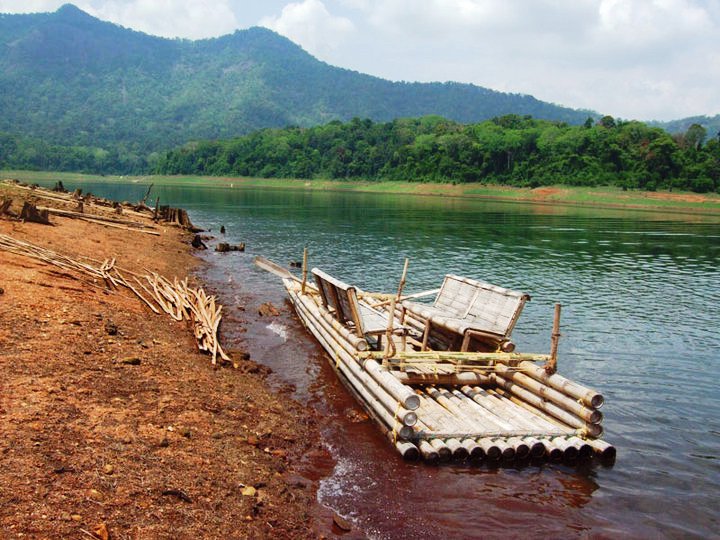
 Chimmony Wildlife Sanctuary Day Trekking/Bird Watching/ Bamboo Rafting/Overnight stay in Forest guest houses and Tree Houses
Morning start your drive from Cochin to Echippara which is the entry point to Chimmony Wildlife Sanctuary.The drive will take 90 minutes from Cochin.The drive is also interesting because the road is through beautiful small villages.After taking necessary permissions etc,the forest guards will take you for a trekking through the forest.Chimmony Wildlife Sanctuary is interesting for the lovers of bio-diversity because it houses a lot of endangered species of flora and fauna.
I still remember our visit in which we witnessed the mud puddling of butterflies which was unforgettable.Our Naturalist Mr Benny gave a detailed explanation on mud puddling of butterflies. Mud-puddling is the phenomenon mostly seen in butterflies and involves their aggregation on substrates like wet soil, dung and carrion to obtain nutrients such as salts and amino acids. This behaviour has also been seen in some other insects, notably the leafhoppers.Lepidoptera (butterflies and moths) are diverse in their strategies to gather liquid nutrients. Typically, mud-puddling behavior takes place on wet soil. But even sweat on human skin may be attractive to butterflies. This behaviour is restricted to males in many species, and in some like Battus philenor the presence of an assembly of butterflies on the ground acts as a stimulus to join the presumptive mud-puddling flock.
This can be a half day or Full day programme depending upon your time availability.Lunch could be arranged inside the Sanctuary,if it’s a full day programme.If you opt for a full day programme,you may opt for a bamboo rafting also through the Reservoir of Chimmony Dam.By evening drive back to Cochin.Or you may also extend your trip to the nearby destinations like Cherai Beach,Nattika Beach etc to stay back.You may also opt to stay in one of the Forest guest houses or a tree house inside the Sanctuary which depends upon availability due to limited number of units.
Established in 1984, Chimmony Wildlife Sanctuary with an area of about 85.067 km2 is on the Western slopes of the Nelliyampathi Hills. The highest peak in sanctuary is Punda peak (1116 m). Along with the neighboring Peechi-Vazhani Wildlife Sanctuary it forms a continuous protected 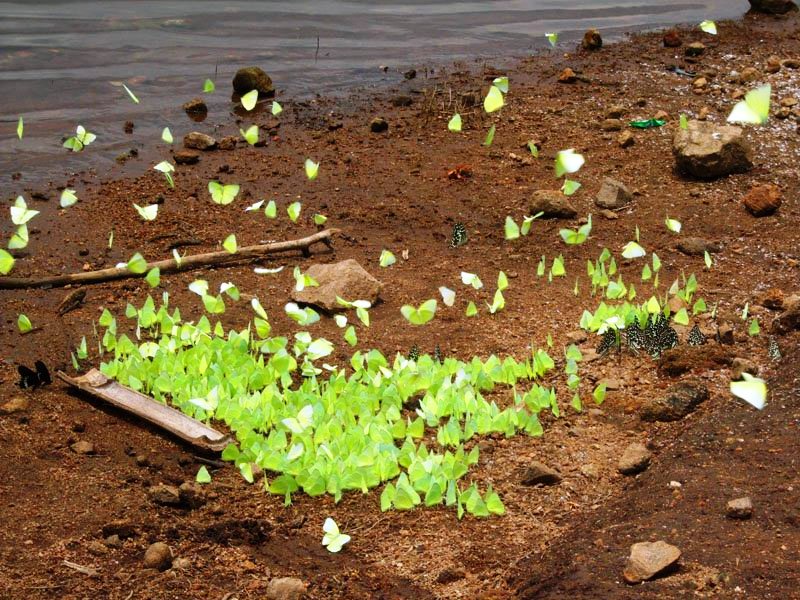 area of 210 km2. It also lies just west of Parambikulam Wildlife Sanctuary, providing some habitat connectivity with the forests of that relatively large protected area. The sanctuary consists of the watershed areas of Kurumali River and Mupliam rivers. Nestled in the sanctuary is Chimmony Dam which is built across the Chimmony river. The headquarters of the sanctuary is at Echippara which is 28 kms away from the Amballoor village in the north direction. Amballoor is 12kms away from Thrissur town in the south direction. There is a dam constructed across the Chimmony river at 75 m above the sea level. Consequent to the construction of the dam, an artificial lake has been formed with an area of 10 sq.km. and 20 m depth. Forest types include Tropical Evergreen Forests, Tropical Semi-evergreen forests, Moist Deciduous Forests etc.
Common tree species are Palaquium ellipticum, Mesua ferrea, Cullenia exarillitia, Dipterocarpus indicus, Hopea parviflora, Dysoxylum, malabaricum, Cedrellatoona, Bombax ceiba, Syzigium cumini, Largerstroemia lanceolata, Adina cordifolia, Albizzia procera, alstoniascholaris, Dalbergia latifolia, Xylia xylocarpa etc.
There are 39 species of mammals, 160 sp of birds, 25 species of reptiles, 14 species of amphibians, and 31 species of fishes are reported from the sanctuary.The common mammals found are Tiger, Leopard, sloth bear, Elephant,Bison, Sambar, barking deer, bonnet macaque, Nilgiri Langur, slender loris porcupine etc.
The sanctuary is an important bird area with 192 recorded avian species. Five Western Ghats endemic bird species occur here, including the grey-headed bulbul (Pycnonotus priocephalus), Indian rufous babbler (Turdoides subrufus) and white-bellied blue-flycatcher (Cyornis pallipes). Other interesting species found here include-Ceylon frogmouth (Batrachostomus moniliger), Indian edible-nest swiftlet (Collocalia unicolor), Malabar trogon (Harpactes fasciatus), Malabar whistling-thrush (Myiophonus horsfieldii) and Loten’s sunbird (Nectarinia lotenia) (Islam and Rahmani 2004). A recent survey recorded the presence of the lesser fish eagle (Ichthyophaga humilis), which until recently was only known from the foothills of theHimalayas.
Other significant sightings during the survey included those of the large hawk cuckoo (Cuculus sparverioides), broad-billed roller (Eurystomus orientalis) and ashy minivet (Pericrocotus divaricatus). About half of the large mammals found in Kerala are reported from Chimmony Wildlife Sanctuary, especially some of the globally threatened species such as tiger (Panthera tigris), Asian elephant (Elep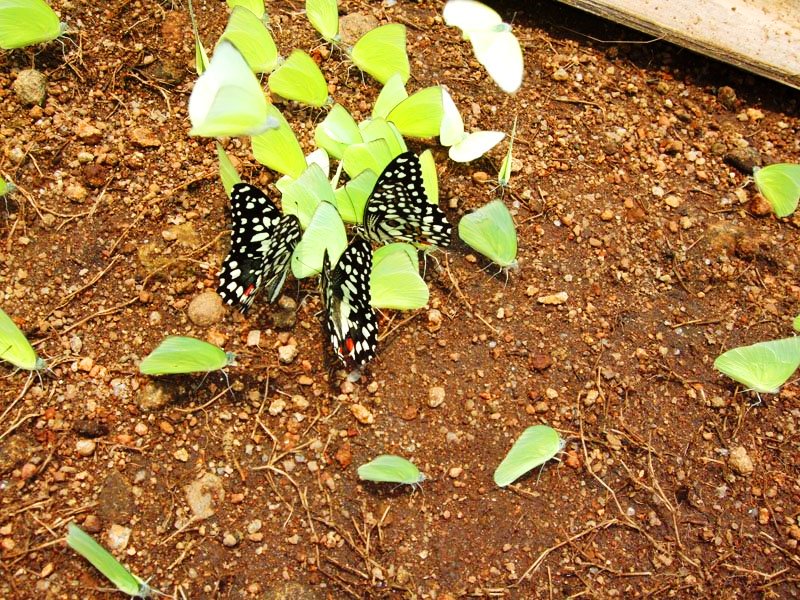 has maximus) and wild dog(Cuon alpinus). Other red-listed species found here include the Indian giant squirrel (Ratufa indica) and the endemic primates-lion-tailed macaque(Macaca silenus), Nilgiri langur (Trachypithecus johnii) and slender loris (Loris lydekkerianus). There are 39 species of mammals, 160 species of birds, 25 species of reptiles, 14 species of amphibians, and 31 species of fishes are reported from the sanctuary.
FOREST TYPES
(A) Tropical Evergreen Forests
Such forests are found in the higher reaches of the Sanctuary. They are thickly wooded with lofty trees and have a closed canopy. High humidity and shade provide ideal habitats for variety of epiphytes and flowering plants. Canes and reeds are abundant. The herbaceous ground flora normally consists of species like Strobilanthus, arrowroot, ferns etc. The trees are tall, cylindrical and some with buttresses.
(B) Semi-Evergreen Forests
These forests appear where the moist deciduous forests merge with the evergreen forests. They contain elements of both the evergreen and moist deciduous forests, the ground floor receives more light than in evergreen forests.
The dominant species in the top canopy are Adina cordifolia (Manjakadambu), Bombax ceiba (Elavu), Cedrala toona (Chandana vembu), Syzygium cumini (Njaval) and Lagerstroemia lanceolata (Venteak). Whereas the lower canopy consists of Cinnamomum zeylanicum (Edana), Evodia roxburgia (Nasagam), and Mallotus philippensis (Karukutty). Species like Calamus rotang, Calamus travencoricus, Laportea crenulata, Ochlandra wightii, Croton malabarica and Clerodendrum infortunatum constitute under growth and ground vegetation.
(C) Moist deciduous forests
These forests occur in the lower elevation of the Sanctuary. The canopy remains leafless from March to May. Adina cordifolia (Manjakadambu), Albizzia procera (Karimthakara), Alstonia scholaris (Ezhilam pala), Dalbergia latifolia (Rosewood), Lagerstroemia lanceolata (Venteak) and Xylia xylocarpa (Irul) are the dominant species in the top canopy. The lower canopy is predominantly occupied by species like Bridelia retusa (Kayanni), Careya arborea (Pezhu), Cassia fistula (Konna) and Dillenia pentagyna (Malampunna). The under growth and ground vegetation consists of Bamboosa arundinacea, Clerodendrum infortunatum, Glycosmis pentaphylla, Helicteres isora, Hollarena antidysentrica, Lantana camara, Acacia indica, Bauhunia vahlii and Calicopteris floribunda.
Endangered species:
The following endangered species namely Alsophila spp, Lasinthus versulosus, Angioptera spp, and Gnetum ula are recorded from the sanctuary
The rare species found are
Trees : Apodytes koddemei, Diospysus nilgirica,
Shrubs : Antisroplie serratifolia, Ruwolfia densiflora
Herbs : Hydrophylla erecta, Departrium punceum
Orchids : Habomaria rariflora,Osmunda raogans
The sole tribal community within the limits of the sanctuary belongs to the “Malaya” tribe. An eco-development Committee was formed in October 2002 for the development of this community comprising 210 members belonging to 52 families residing in two colonies adjacent to the sanctuary. The tribal based eco-tourism projects initiated by the committee are progressing quite well.


