- Company
- About Us
- Brand Story
- Our Team
- Testimonials
- Ethical Code
- Sustainable Tourism
- Sustainable Tourism Mission Statement
- Corporate Sustainability Policy
- The carbon footprint of tourism
- Sustainability Feedback
- Dos & Don’ts
- Related Links to Sustainable Tourism
- Safe Travels Protocols
- Sustainability Guidelines for Activities
- Fair Trade Division
- Case Study : Keralavoyages
- Sustainability Progress Report
- Awards & Acknowledgements
- Sustainable Policies
- Privacy Policy
- Contact
- Services
- TRAVELERS PICK
- Sustainable Itineraries
- Tours in India
- Day Programs
- Special interest tours in India
- Luxury Tours in India
- Beach Holidays
- Culture, Tradition and Lifestyle
- Nature Trails
- Women Tours
- Family Holidays
- Nature Walks and Wildlife Safaris in India
- Backwater Tours in Kerala
- Ayurveda Holidays in Kerala
- Trekking & Camping
- Temple Tours in India
- Birding Tours in the Western Ghats
- Art Forms & Festival tours
- Tribal Village Tours in India
- Heritage Tours in India
- History & Archeology Tours in India
- Special accommodations in South India
- Active Holidays
- 12 Days Kerala, Karnataka and Goa
- 7N Multiple Days Trekking and Camping in Munnar
- Nature Walks & Wildlife – Western Ghats Birding & Safaris
- Nature Treks & Wildlife Safaris – Western Ghats Birding & Safaris Shorter Version
- Cycling & Trekking in Kerala – 15 days activity tour in Kerala
- 5 days trekking and staying at Jungle Lodges in Chinnar Wildlife Sanctuary, Munnar
- 14 Days Western Ghats – Nature Walks, cycling & Wildlife Safaris
- MICE
- Destination Wedding
- Destinations
- Exclusive
- Contact



Amazing South India
15 Days 14 Nights South India Tour Package
Kerala & Tamilnadu
Inspite of its large geographical area,India has an identified profile in every region.South India is always known for its peaceful nature,exquisite lifestyle,variety of regional culinary delights,experience programmes in culture and art forms,historic and pre historic arts and architecture,Nature in its abundance etc.The temples of Tamilnadu and the serene backwaters of Kerala are unique.Many wildlife sanctuaries in Western Ghats lie in South India. You will look at the villages in wonder,and admire the people because they are welcoming and genuine.In the below programme we are trying to give you a glimpse through the highlights of two states in South India,namely Tamilnadu & Kerala.
Day 01 – Chennai-Mahabalipuram (2 Hour drive)

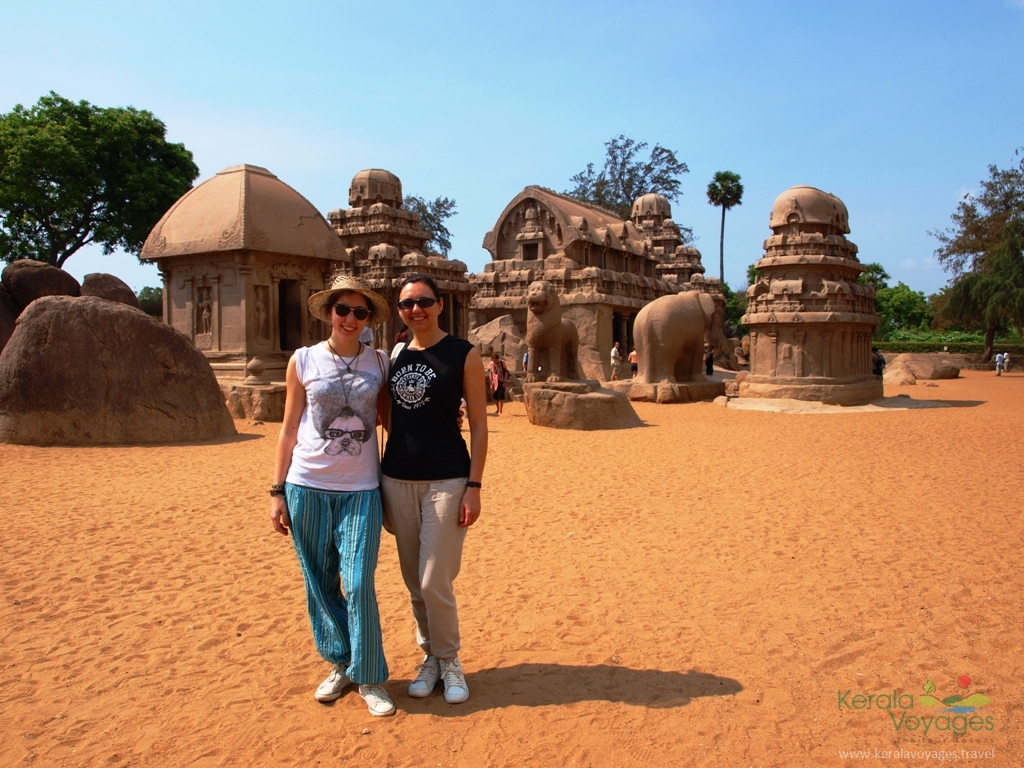
On arrival in Chennai,you will be received to be transferred to Mahabalipuram. Check in at the Hotel. Day to explore the serene beaches of Mahabalipuram otherwise known as Mamallapuram. Overnight stay at Mahabalipuram.
Day 02 – Kanchipuram-Mahabalipuram
After an early breakfast, drive to Kanchipuram, the city of thousand temples. Visit Kailasanatha Temple from the 8th century AD. In Kailasanatha Temple, the Pallava Style of Dravida Vimana (The Tower over Sanctum) was imitated later at Pattadackal in Karnataka in the second half of 8th Century AD by Chalukyas. From there the Rashtrakudas borrowed the style in the 9th Century AD at Ellora, Maharashtra. Later visit the famous Ekambareswara Temple which is a good example of the typical Composite style of Architecture. The construction was started in 8th or 9th Century by the Pallavas but continued by Cholas in 12th Century and finished by the Vijayanagar Dynasty during 16th Century. Also visit Varadaraja or Devaraja Temple dedicated to Lord Vishnu and visitable parts are of 16th Century AD. After Temple visits, you may visit a silk weaving unit, as Kanchipuram Silks is known for its unque features and quality. By noon drive back to Mahabalipuram for a guided tour to explore the ancient heritage of Mahabalipuram temples, built in 7th century is today the sight of several antique sculptural marvels.Overnight at Mahabalipuram.
Kanchipuram – Kanchipuram, an ancient city known as “the city of thousand temples”, is one of the seven most sacred pilgrim centres for the Hindus. There now remain about 126 temples and a few more in its outskirts. Today, apart from its temples, this small town is also known for its thriving handloom industry. Ekambaranath Temple, also known as Ekambareswarar Temple – The eleven-storey structure which is adorned with beautiful Stucco Figures is one of the tall temple towers in South India. The ancient mango tree in the courtyard inside the temple is revered by childless couples. They faithfully tie small cradles to the branches of the tree and leave with the hope that their desire for an offspring will be fulfilled. Also visit Kailasanatha Temple and Varadaja Temple.
Mahabalipuram – It is among the most outstanding examples of Dravidian art and architecture. The monuments are floodlit at night and so it is possible to enjoy their beauty even after sunset. Arjuna’s Penance – This skillfully carved rock is the largest bas – relief sculpture in the world. There are nine rock cut cave temples. The Mahishasuramardhini cave, contrasting the goddess fighting a demon on one side, and Lord Vishnu’s cosmic sleep on the other, is a particularly remarkable one. Five Rathas -These rock-cut temples are rated as excellent example of Pallava art. Shaped in different styles, the fort of the rathas are supposed to have been scooped out of a single rock formation.
Day 03 – Pondicherry
After breakfast at the hotel, proceed to Pondicherry which still carries a strong flavour of the French presence in India. Enroute you may opt to visit Auroville which is a nice place to unwind yourself.Afternoon go for a guided tour of Pondicherry .The French Quarter in the city close to the beach is worth covering during late evening hours. The traditional French architecture is still maintained even in the latest renovations and the Indian Natinal Trust for Art & Cultural Heritage (INTACH) is the authorized agency for any such renovations in Pondicherry.Sight seeing & overnight stay at Pondicherry.
 The old town of Pondicherry has a unique charm and the French Quarter is unique in its cleanliness,architecture,discipline etc.To experience the spirit of Pondicherry,its essential to walk through the old town and closely observe the nature of its architectural traditions. Its interesting to note that if someone wants an old building to be restored in Pondicherry,the local authorities ask for the approval of INTACH on priority.This is interesting and we could see how naturally those old buildings were restored in French style.One will walk through Town Hall (Mairie/Hotel de Ville),Notre Dame des Anges Church,Ecole Francaise d’Extreme-Orient,Cluny Emboidery centre,Alliance Francaise,INTACH Heritage Centre for Exhibitions,Lycees Francaise and lot more.
The beach close to the French quarter is landscaped with wide stone paved pathways and the vehicular traffic is banned from 6 PM till 7.30 AM.its strictly maintained and the pedestrians enjoy their walk in the evening.Many of the old heritage buildings are now getting converted to hotels and guest houses.All kinds of restaurents with international cusines are seen everyehere.A walk through the market place on M G Road is also amazing.
The main attraction in terms of the universality of Pondicherry is Auroville belongs to no religion,nation,colour etc but to all men of goodwill,all those who thirst for progress and aspire to a higher and truer life.The dream behind this divine destinations is “A place on earth which no Nation could claim as its own,where al human beings of goodwill who have a sincere aspiration could live freely as citizens of the world and obey one single authority,that of the supreme truth;a place of peace,concord and harmony where all the fighting instincts of man would be used exclusively to conquer the causes of his sufferings and miseries,to surmount his weaknesses and ignorance,to triumph over his limitations and incapacities,a place where the needs of the spirit and the concern for progress would take precedence over the satisfaction of desires and passions,the search for pleasure and material enjoyment.The shopping plaza at the Auroville is a paradise for shoppers where you find a unique range of eco products made in the local villages.
Day 04 – Pondicherry-Tanjore (4 Hours Drive)
After breakfast, drive to Tanjore .Enroute visit Chidambaram and Gangaikondacholapuram.Later visit Darasuram Iravadeeswarar Temple (UNESCO Monument),Mahamaham Tank etc.The village of Kumbakonam has many handicrafts units and vessel making centres.Evening for local visits. Overnight stay at Kumbakonam/Tanjore.
Chidambaram Temple is a Hindu temple dedicated to Lord Shiva located in the heart of the temple town of Chidambaram, 78 km south of Pondicherry and 60 km north of Karaikal in Cuddalore District, the east-central part of the Tamil Nadu state of southeastern India. The Sangam classics refer to Viduvelvidugu Perumtaccan, respected clan of traditional Vishwakarmas, as being the chief architect of the temple renovation. There have been several renovations in its history, particularly during the days of Pallava/Chola emperors in ancient and pre-medieval periods.
Rajendra I, the mighty Chola King, established his new capital at Gangaikondacholapuram with this magnificent city and temple to Lord Siva in the 11th century. It is 50 kms. from Chidambaram. The temple is noted for its massive and richly carved sculptures. A big Nandi in front of the temple made of brick and mortar, a lion head well with a flight of steps leading to the water level and the gigantic dwarapalakas are the other special features of this temple. The temple has a huge quadrangular passage which has dark ambulatory passage in between the double wall construction which is meant to distribute the vertical load of the temple superstructure. The inside passage is accessible to tourists between 9 AM to 12 Noon and 6 PM to 8 PM.
Airavatesvara Temple in Darasuram (Tamil Nadu), dating back to the second half of the 12th century is one of the 4 biggest temples erected by the Chola Dynasty with those of Tanjore, Gangaikondacholapuram and Tribhuvanam. Remarkable monument for its architecture and its great decorative wealth, it has been registered in the world heritage list of the UNESCO in 2004. You can also see the traces of amazing paintings popular with Nayaks’ period of 17th Century. Again the influence of social life is very much depicted in the paintings as well as the carvings.
Day 05 – Tanjore
 Morning, visit the famous Brihadeeswara temple, the finest contribution to Dravidian temple architecture.Also visit Palace Museum in Tanjore.Afternoon opt for a village visit,bullock cart ride or a visit to the handicrafts making unit.Overnight at Hotel.
Tanjavur rose to the glory during the later Chola reign between the 10th and 14th Centuries and became a centre of learning and culture.Thanjavur is still the centre of all the classical arts and music.The Big Temple and the other famous temples in the district are known all over the world. It is the headquarters of Thanjavur district, the ‘Rice Bowl’ of Tamil Nadu. Thanjavur is also famous for its distinctive art style, which is usually a combination of raised and painted surfaces.Tanjore paintings are deeply rooted in tradition and still innovative within limits. This art is sacred and dedicated.The Raja Raja Chola Art Gallery has some fine pieces of stone and bronze sculptures from the 9th and 12th centuries.
Day 06 – Tanjore-Trichy-Madurai (4 Hours Drive)
After breakfast, proceed to Trichy to visit Srirangam temple. Trichy, situated on the banks of the river Cauvery is the fourth largest city in Tamil Nadu. It was a citadel of the early Cholas which later fell to the Pallavas.Afternoon drive to Madurai. Overnight stay at the hotel.
Tiruchirapalli – Trichy is a fine blend of tradition and modernity built around the Rock Fort. Apart from the Fort, there are several Churches, Colleges and Missions dating back to the 1760s. The town and its fort, now in Trichy were built by the Nayaks of Madurai. This city has given great Tamil scholars whose contributions to the Tamil literature have been very significant. Tiruchirapalli (Trichy), situated on the banks of river Cauvery, is famous for the Ranganatha temple at Srirangam.
Day 07 – Madurai
After a leisurely breakfast,go for a guided tour of Madurai.In the evening you may opt to visit Meenakshi Temple again to witness the Temple closing Ceremony. You may also visit the flower market to feel the local life around the temple. Overnight stay at Madurai.
Madurai or the “city of nectar” is the oldest and second largest city of Tamil Nadu. This city is located on Vaigai River and was the capital of Pandyan rulers till the 14th century. The Pandyan king, Kulasekhara had built a gorgeous temple around which he created a lotus shaped city. Mythology says when city was being named; Lord Shiva blessed the city and its people. On the auspicious occasion some Divine nectar (“Madhu”) fell from the matted locks of Shiva and hence the city was named “Madhurapuri”. This sacred town of south attracts thousands of pilgrims and visitors from India as well as abroad. Madurai is synonymous with The Meenakshi Temple, Tirumalai Nayak Palace, Mariamman Tank, Koodal Alagar Temple, Gandhi Museum and Government Museum.
Meenakshi Temple – In the Ashta Shakti Mandapam inside the temple, the sculpted pillars tell the story of the beautiful princess of Madurai and her marriage to Lord Siva. The pillars of the Mandapam are decorated with scenes from the wedding of Meenakshi and Sundareswarar. The life of Madurai revolves around the Sri Meenakshi Sundareswarar temple. This magnificently carved temple is the main attraction of Madurai and its huge Gopurams towers over the city. Meenakshi temple has a thousand pillared ‘Mandapam’. Precisely there are 985 pillars and each of them is delicately and exquisitely carved. Among these are the musical pillars, which produce music when tapped. Surprisingly, these musical pillars are carved out of a single granite rock. The temple has been a hub of Tamil culture and has been sponsoring literature, art, music, and dance in the region for a long time.
Day 08 – Periyar (3.5 Hours Drive)
After an early breakfast, proceed to Thekkady, perched amidst dense greenery, in the outskirts of Periyar tiger reserve. Afternoon option for a boat tour through the Periyar Lake to spot the wild animals or a 3 hour guided trek through the National Park. Evening visit a Spice Farm with option to go for an elephant ride. Overnight stay at Thekkady.
Periyar – The very sound of the name conjures up images of elephants, unending chains of hill and spice scented plantations. Here, in the crisp, cool air of the Western Ghats you will experience the most enchanting holiday. With the animals of the wild and the simple mountain people. Periyar Tiger Reserve is one of the finest wildlife reserves in India, and spread across the entire district are picturesque plantations and hill towns that hold great opportunities for treks and mountain walks.
The Thekkady sanctuary is one of the best in the country for watching and photographing wild life. A cruise through the waters of Periyar Lake around which the wildlife sanctuary is situated, offers a soul-stirring pleasant experience. This is the only sanctuary in India where you can have the unique experience of viewing wildlife at close quarters from the safety of a boat on the lake. The greatest attraction of Periyar remains the large herds of wild elephants that come down to the lake’s edge. The tiger and leopard are sighted when the forest water holes dry up and these animals come and drink water from the river.
Indian agriculture began by 9000 BC as a result of early cultivation of plants, and domestication of crops and animals. Settled life soon followed with implements and techniques being developed for agriculture. Plants and animals—considered essential to their survival by the Indians—came to be worshiped and venerated.
Indian spices include a variety of spices and herbs grown across the Indian subcontinent (South Asia). With different climates in different parts of the country, India produces a variety of spices, many of which are native to the Subcontinent, while others were imported from similar climates and have since been cultivated locally for centuries.Spices are typically heated in a pan with ghee or cooking oil before being added to a dish. Lighter spices are added last, and spices with strong flavor should be added first. Curry is not a spice, but a term which refers to any side dish in Indian cuisine. It could be with a gravy base or a dry item. A curry typically contains several spices blended together.
Day 09 – Cochin (5 Hours Drive)
Morning, after breakfast, proceed to Cochin. Enroute, visit a Tea Factory to watch the tea making process. On arrival at Cochin,check into your hotel.Evening watch a classical art performance at Greenix Theatre which is a kaleidoscope of Kerala classical arts like Kathakali, Kalaripayattu (Martial Arts),Bharatanatyam etc. Overnight at Hotel.
From time immemorial, the Arabs, British, Chinese, Dutch, and Portuguese have left indelible marks on the history and development of Cochin. Over the years, Cochin has emerged as the commercial and industrial capital of Kerala and is perhaps the second most important city on the west coast of India. Cochin has Asia’s best preserve Synagogue, the Dutch Palace and the oldest European Church in India – the St. Francis Church.
Day 10 – Cochin
Morning, after breakfast proceed for a village backwater cruise with lunch to explore the pristine beauty of village backwater life. Afternoon go for a City Tour, exploring Chinese fishing nets, St.Francis church, the Jewish synagogue, Dutch palace etc… Cochin now named as Kochi is the Commercial capital of Kerala and a happening place.The development of the city is to be compared to that of any other Metros in the country. Overnight at the hotel.
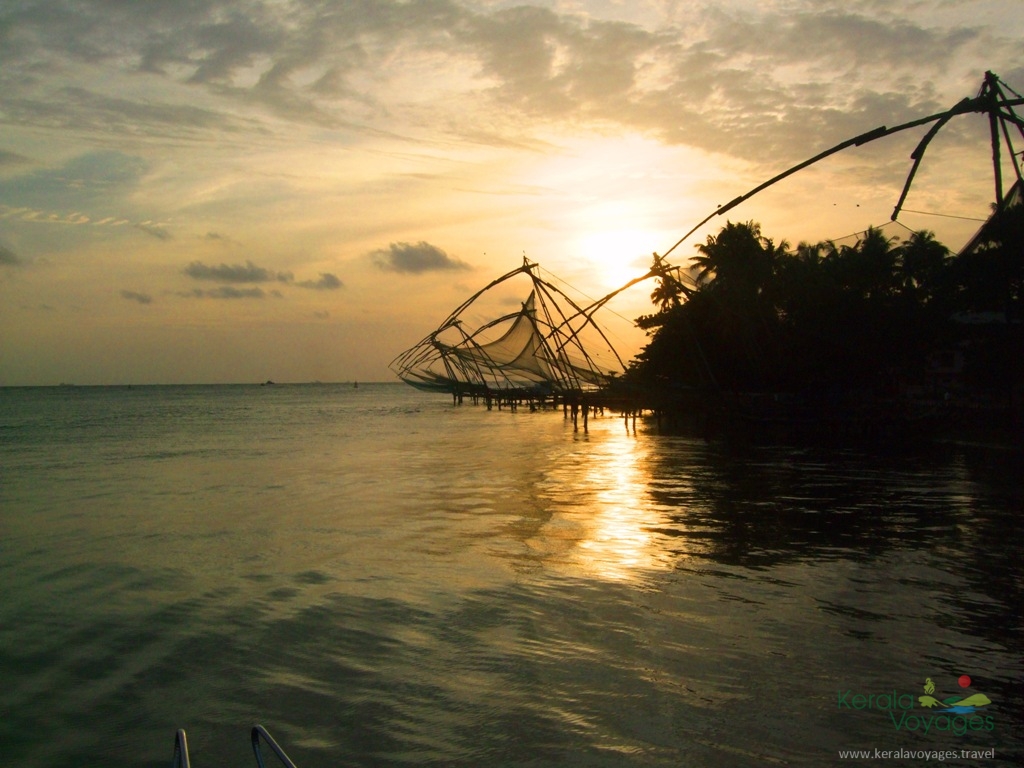 Village backwater Cruise – A journey in a country boat into the pristine purity of a typical village backwater of Kerala…. goes through the zigzagging narrow canals and paddy fields fringed with coconut palms…..watch rare birds….country boat making….a natural fish farm where you can go fishing…. You will witness coir making,toddy tapping before you end up your exclusive experience in our Farm House for lunch -a delicious traditional Kerala dish under a tree…..While scrolling through this amazing village,you will watch the common life of the villagers for their livelihood.You will see them fishing in the river,the women do the coir making,a toddy tapper who does his job as a routine,men climbing the coconut trees to pluck the coconuts,later peeling the same to prepare to dry and make oil extraction possible.Its all about a life experience which you will cherish throughout your life.
Cochin Sightseeing – St Francis Church, built in 1510 by friars brought to India by Vasco da Gama, is the first European church built in India and is the site where Vasco da Gama was buried. The Jewish Synagogue was built in 1568, Chinese hand-painted tiles are one of the attraction. This, the only Synagogue in India has a nostalgic past of a Jewish Diaspora. The “Dutch Palace” was built in the 1550s; the palace contains excellent mythological murals and a rare example of traditional Keralite flooring – a subtle mix of burnt coconut shells, lime, plant juices and egg whites – which gives the effect of polished marble.
Day 11 : Cochin – Kumarakom(1.5 Hours Drive)
After breakfast, check out from the Hotel & proceed to Kumarakom, which is known for its unique backwater & scenic beauty, sprinkled with traditional houseboats, country crafts, rural lifestyles and Tranquility. The slender coconut palms everywhere, its never ending paddy fields, meandering lagoons and backwaters, mangroves full of nesting birds of a hundred varieties in the pristine beauty of Kumarakom. Rest of the day for exploring the unending backwaters.You may opt to have a rejuvenating Ayurvedic Massage. Overnight at Resort.
Kumarakom is a cluster of little islands on the Vembanad Lake and a picturesque, clean village like most places in Kerala. The Kumarakom Bird Sanctuary is spread across 14 acres, the bird sanctuary is a favourite haunt of migratory birds and an ornithologist’s paradise. Egrets, darters, herons, teal, waterfowl, cuckoo, wild duck and migratory birds like the Siberian stork that live in flocks are a fascination for visitors. The best way to watch the birds of the Kumarakom sanctuary is a boat trip round the islands.
Day 12 : Houseboat
After breakfast, board the houseboat from the resort jetty for a nights’ stay with on board lunch and dinner, covering Alleppey villages and the life around the villages.Earlier days the big boats were used as a media of transporting goods by the local farmers and later these boats converted into Houseboats with minimum amebities and now the Houseboats are most conveniently furnished with comfortable aircon and bio toilets etc.Your food will be freshly cooked and served on board. Overnight in the houseboat.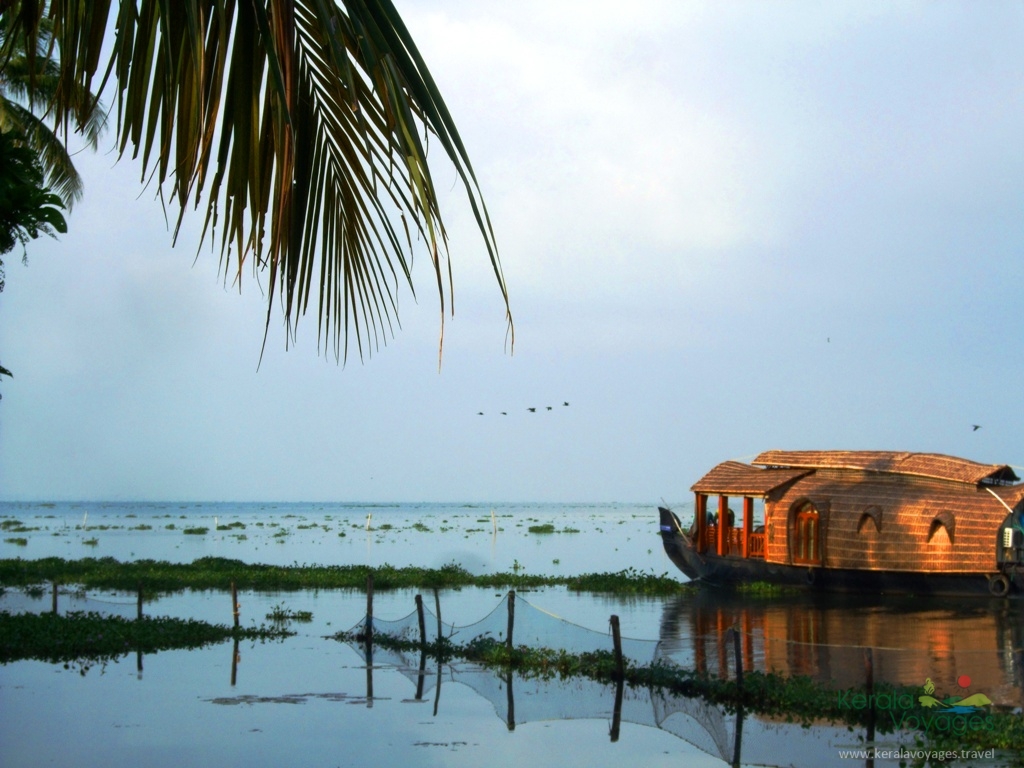
What is truly magical about a houseboat is the breathtaking view of the untouched and otherwise inaccessible rural Kerala that it offers. The houseboats have all the creature comforts of a good hotel including furnished bedrooms, modern toilets, cozy living rooms, a kitchen where are cooked on board and supplemented with fresh fish from the backwaters. Today, the tradition is still continued and the food from the local cuisine is served by the Kuttanad locals, on board. The name Backwaters brings you the very thought of Houseboats. Food and leisurely times spent on-board with the feeling and privacy of house as well as enjoying the natural beauty. A Cruise amidst marvelous mangrove forests, captivating coconut canopies, swaying palms, mangrove forests, pulsating paddy fields sprinkled with enchanting waterways and canals decked with white lilies, can be quite a rejuvenating experience for the weary traveler. Enjoying a cruise in these backwaters is not to be missed, as it leaves you feeling fully rejenuvated. The banks of these backwaters in Kerala are the most enchanting picnic spots. You get to experience the native way of living.
Day 13: Alleppey-Kovalom (4 Hours Drive)
Enjoy your breakfast on board.Later,drive to the world renowned beach destination of Kerala, Kovalam. On arrival at Kovalam, check in at the Hotel. Day free to enjoy the beach life. Overnight at the Hotel.
Kovalam is considered as the most trendy beach retreat in India. A combination of three small beaches, Kovalam, meaning “a groove of coconut trees,” is just 16 km from the state capital of Kerala – Thiruvananthapuram. The sheltered natural bay, the azure blue waters and the sumptuous spread of green palm groves make it a tropical paradise of sorts.
Day 14: Kovalam
Full day explore the beauty of beaches. You may opt to visit Trivandrum City,if you wish.Overnight at the resort.
 Kovalam was a small, sleepy village. It lay in humble obscurity along the picturesque coast of Kerala. Then around 1930, this little village was unexpectedly shaken out of its lethargic slumber and thrust on the international tourist map. The vendors of holiday dreams along the sea had discovered the fabulous silver sands and palm-fringed shores of Kovalam. From then onwards, there was no looking back. From sun bathing to swimming, Ayurvedic rejuvenation to yoga and meditation, herbal body toning massages to special cultural programmes and catamaran cruising, holidays in Kovalam is a tourists delight. The Kovalam lighthouse beach is where most visitors spend their time.
Being the capital city of Kerala, Trivandrum is surrounded by seven hills and endorses ancient and modern style of architecture. Visit, Napier Museum, which houses a rare collection of archaeological and historic artifacts, bronze idols, ancient ornaments, a temple chariot, ivory carvings and life-size Kathakali dancers; Sree Chitra Art Gallery, which display a century old world famous paintings of Raja Ravi Varma. Kuthiramalika Palace Museum, with rare specimen of workmanship in traditional Travancore style of architecture has exquisite woodcarvings.
Day 15 – Trivandrum Departure
Like all good things,your holiday experience comes to an end but you will always carry with you memories of this unique and unforgettable experience.Today, you will be assisted and transferred to Trivandrum International airport for your flight home!!


